
GiveBetter x USA

Giving in USA

Find promising ways to improve lives, guided by evidence and estimated impact.

Illustration of a city neighborhood and park

Look for meaningful impact

Compare how a donation could improve health and household resources in USA.

Illustration of research books

Follow the evidence

Understand the outcomes, costs and assumptions behind each estimate.

Illustration of choosing a charity

Choose with care

Read the report and confirm what additional donations could achieve.

Institute for Progress logo. Source: Institute for Progress.

RESEARCH LEAD 1 OF 4

Institute for Progress

Overview

Institute for Progress researches and helps implement U.S. innovation policy across science, biotechnology, immigration, infrastructure and emerging technology. It publishes reform proposals, convenes experts and supplies technical assistance to policymakers; NSF independently confirms an agency partnership. Donations support its researchers, expert convenings and practical assistance on policy design and implementation.

Cost-effectiveness

About $29K to help one more skilled worker stay in the U.S.[1] We estimate $33K per DALY.[2] Nonprofit yearly budget is $2.6M.[3]

Why investigate

A formal NSF partnership and concrete clinical-trial proposals establish substantive work beyond general advocacy.

Main reservation

The health-and-income estimate depends on hypothetical causal scale and incidence; no study identifies the combined organization-specific return.
Organization and research

Institute for Progress

Full research report
Kids and Car Safety's official website image. Source: Kids and Car Safety.

RESEARCH LEAD 2 OF 4

Kids and Car Safety

Overview

Kids and Car Safety documents vehicle-related injuries, educates caregivers and supports affected families. It advocates vehicle designs that can detect an unattended child and alert someone able to provide a timely rescue. Its national work also covers backovers, frontovers, entrapment and submersion.

Cost-effectiveness

We estimate $92K per DALY.[1] Nonprofit yearly budget is $262K.[2]

Retained historical reference; a current combined estimate is unavailable.

Why investigate

Detecting a child and enabling timely rescue offers a clear route to preventing avoidable deaths.

Main reservation

The change in adoption caused by additional support is a forecast assumption, not an identified organization-specific effect.

Organization and research

Kids and Car Safety

Full research report
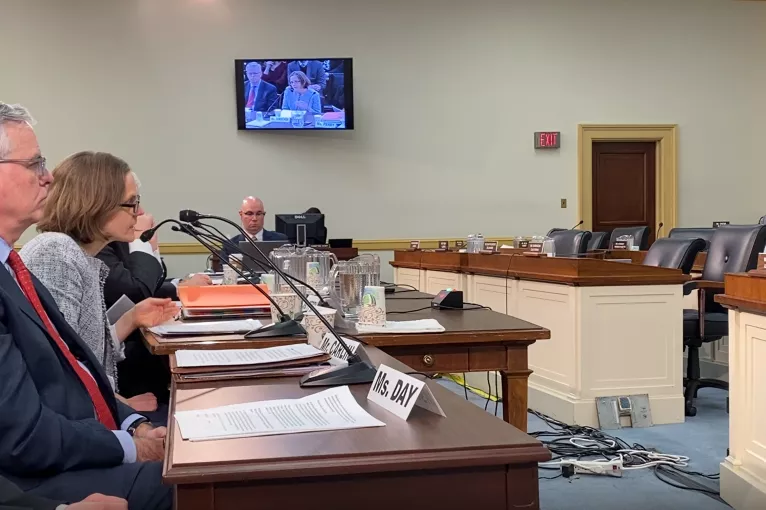
CSPI’s Sarah Sorscher testifies before the House Subcommittee on Health. Photo: CSPI.

RESEARCH LEAD 3 OF 4

Center for Science in the Public Interest

Overview

CSPI researches food and health risks, informs consumers and advocates for stronger public protections. Its sodium work includes scientific submissions, monitoring proposals and public accountability for industry reformulation. We examine whether additional charitable work could improve eventual sodium reductions or bring an otherwise similar reform forward.

Cost-effectiveness

About $490K per nonfatal heart-disease or stroke case prevented.[1] We estimate $113K per DALY.[2] Nonprofit yearly budget is $17.7M.[3]

Why investigate

Sodium reduction has a well-supported blood-pressure mechanism and a finite US cardiovascular model.

Main reservation

The effect of additional work on compliance or implementation timing is an explicit judgment, not measured charity attribution.

Organization and research

Center for Science in the Public Interest

Full research report
Surgery on Sunday’s volunteer surgical care program. Photo: Surgery on Sunday.

RESEARCH LEAD 4 OF 4

Surgery on Sunday

Overview

Surgery on Sunday is the Lexington, Kentucky charity coordinating free outpatient surgery and associated assessment for eligible uninsured or underinsured people, not the separate Louisville organization. Its volunteer surgeons, anesthesia teams and donated facilities support procedures ranging from cataracts and hernias to gallbladder, tonsil and orthopedic surgery; a donation pays the recipient’s support costs rather than buying a standardized operation. The modeled benefit is additional relief of pain, impaired vision and functional limitations over a finite period, after allowing for alternative treatment, operating constraints and surgical harm.

Cost-effectiveness

About $2,900 to provide surgery for one patient.[1] We estimate $124K per DALY.[2] Nonprofit yearly budget was $263K (2024).[3]

Why investigate

The service has a direct clinical pathway and screens patients for medical necessity; clinicians may choose less invasive care rather than operate.

Main reservation

Our working estimate is about $120K per DALY, combining health and household-resource equivalents; clinical persistence, targeting, cash costs and donation-driven surgery remain judgments.

Organization and research

Surgery on Sunday

Full research report