
GiveBetter x Houston

Giving in Houston

Find promising ways to improve lives, guided by evidence and estimated impact.

Illustration of a city neighborhood and park

Look for meaningful impact

Compare how a donation could improve health and household resources in Houston.

Illustration of research books

Follow the evidence

Understand the outcomes, costs and assumptions behind each estimate.

Illustration of choosing a charity

Choose with care

Read the report and confirm what additional donations could achieve.

Big Brothers Big Sisters Lone Star logo. Source: Big Brothers Big Sisters Lone Star.

RESEARCH LEAD 1 OF 4

Big Brothers Big Sisters Lone Star

Overview

Big Brothers Big Sisters Lone Star matches children facing adversity with screened volunteer mentors who meet them regularly, in community-based, school-based and Amachi (children of incarcerated parents) programs. It is a Texas agency based in Dallas whose core markets include Greater Houston, where the program has run since the 1950s; it served 5,110 children in 2024. This in-depth review prices the organization’s whole cost per match against long-run earnings from a tax-record follow-up of Big Brothers Big Sisters’ randomized trial, in which Houston was one of eight sites.

Cost-effectiveness

We estimate $60K per DALY.[1] Nonprofit yearly budget is $13.3M.[2]

Why investigate

The 1991–93 randomized trial of about 1,100 youth found behavior improvements while matched; linked tax records show treatment youth were significantly more likely to attend college.

Main reservation

Our working estimate is about $61K per DALY; all of it is income, and the randomized trial’s own earnings estimate is imprecise.


Organization and research

Big Brothers Big Sisters Lone Star

Full research report
AVDA logo. Source: AVDA.

RESEARCH LEAD 2 OF 4

AVDA

Overview

AVDA provides legal advocacy and trauma support for domestic-abuse survivors in Greater Houston and neighboring counties. Its attorneys and advocates help with safety planning, protective orders, divorce, custody and access to practical resources. The deep review assesses both health and net household resources, using a newer Harris County support reference and full client burdens.

Cost-effectiveness

About $3,200 per household receiving domestic-violence support.[1] We estimate $1.3M per DALY.[2] Nonprofit yearly budget is $3.8M.[3]

Why investigate

Primary grant and service records identify a local legal-advocacy delivery route and concrete resource mechanisms.

Main reservation

Supported adults and children are not deduplicated households, completed cases or clinical responders.

Organization and research

Crisis support pictured on Crisis Intervention of Houston's official website. Photo: Crisis Intervention of Houston.

RESEARCH LEAD 3 OF 4

Crisis Intervention of Houston

Overview

Crisis Intervention of Houston provides free, anonymous crisis counseling through telephone and teen text services. Trained volunteers listen, help callers stabilize emotionally and connect them with other support. Its programs also include suicide-bereavement groups, education and community crisis response.

Cost-effectiveness

We estimate $1.5M per DALY.[1] Nonprofit yearly budget is $197K.[2]

Retained historical reference; a current combined estimate is unavailable.

Why investigate

Current recipient-owned pages identify a concrete local hotline and trained volunteer service.

Main reservation

Historical contacts are not current unique households, and 988 support may substitute.

Organization and research

Crisis Intervention of Houston

Full research report
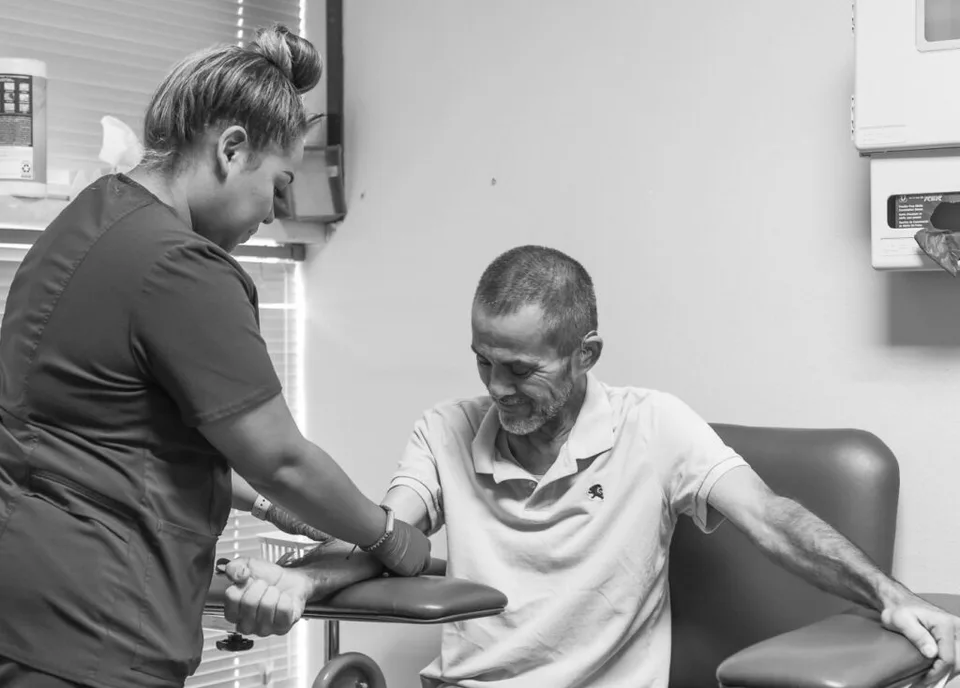
Clinic care pictured on Christ Clinic's official website. Photo: Christ Clinic.

RESEARCH LEAD 4 OF 4

Christ Clinic

Overview

Christ Clinic provides primary, preventive and specialty care to uninsured and underinsured people in the Katy area. Its Total Care program combines chronic disease care, medication assistance, laboratory services and limited behavioral health treatment. Express Care, employer memberships and the church-linked 2535 initiative provide additional routes to accessible care.

Cost-effectiveness

We estimate $1.9M per DALY.[1] Nonprofit yearly budget is $2M.[2]

Initial review.

Why investigate

Current eligibility and service descriptions are specific about low-income access.

Main reservation

No current unique completed treatment cohort or causal outcomes were verified.

Organization and research