AI ClaimsRapid review

Neil Shubin · 2008

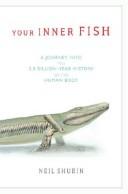
Your Inner Fish

A Journey into the 3.5-Billion-Year History of the Human Body

Cover via Open Library

Rough AI truth score

92/100

Shubin's central lesson—that the human body is a modified vertebrate inheritance—is strongly supported by fossils, comparative anatomy, embryos, and genes. Specific fossils illuminate transitions without being literal direct ancestors, and evolutionary history does not make present anatomy inevitable.

Based on three central claims · high confidence

The three claims

01Supported

The architecture of the human body is built from deeply conserved structures and developmental programs shared with other vertebrates.

Homologous bones, nerves, genes, and developmental pathways connect human limbs, heads, senses, and organs to earlier vertebrate forms. Molecular comparisons independently reinforce relationships first inferred from anatomy and fossils.

02Supported

Tiktaalik documents a predicted combination of fish and tetrapod features near the transition from water to land.

Its age, depositional setting, fins, neck, skull, ribs, and internal anatomy fit an intermediate grade among lobe-finned fishes and early tetrapods. It need not be a direct ancestor to provide strong transitional evidence.

03Mostly supported

Many vulnerabilities and oddities in human anatomy are understandable as modifications of inherited evolutionary structures.

Historical constraint helps explain recurrent nerves, hernias, teeth, limb patterns, and developmental tradeoffs. Present disease risk also depends on environment, aging, culture, and recent evolution, so ancestry is an explanation rather than a complete diagnosis.

Other claims worth checking
  • Fossil searches can be guided by geological age and ancient environment.
  • Embryology preserves modified developmental relationships rather than replaying adult ancestors.

What this number means. It is an AI-generated first-pass judgment of three central factual or causal claims—not a rating, exhaustive fact-check, or human peer review. Claim credits are 100% for supported, 75% for mostly supported, 50% for mixed, and 25% for weak, then averaged and rounded. Lower confidence means the score should move more as better evidence arrives.

Method three-central-claims/0.1.0 · checked 2026-09-01 · 3/3 selected claims assessed · method and source audit