AI ClaimsRapid review

Matthew Walker · 2017

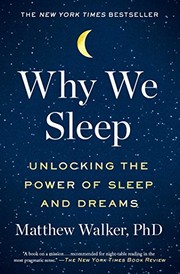
Why We Sleep

Unlocking the Power of Sleep and Dreams

Cover via Open Library

Rough AI truth score

58/100

Walker accurately makes sleep central to health, learning, safety, and performance. The book often turns associations or acute laboratory effects into dramatic universal claims, and its eight-hour rhetoric is stricter than consensus guidance built around individual variation and at least seven hours.

Based on three central claims · medium confidence

The three claims

01Mostly supported

Regularly getting insufficient sleep impairs attention, learning, mood, and safety and is associated with adverse long-term health outcomes.

Expert consensus and experimental sleep restriction support acute cognitive and safety effects, while cohorts associate short sleep with several chronic outcomes. Long-term causal magnitudes are harder to isolate because illness, work, stress, and social conditions influence sleep.

02Mostly supported

Most healthy adults should regularly obtain at least seven hours of sleep, with needs varying by person and circumstance.

A multidisciplinary consensus panel recommends seven or more hours for adults, explicitly recognizes individual variation, and declines to impose a general upper limit. This supports adequate sleep but not a universal rule that every adult needs exactly eight hours.

03Weak

A single night of modest sleep loss causes large, precisely quantified damage across immunity, cancer risk, fertility, and lifespan.

Acute sleep loss changes many laboratory measures, but dramatic percentages do not automatically translate into clinical disease or lifetime risk. Consensus reviews note small, short experiments, self-report error, confounding, and limited generalizability, making broad one-night claims too strong.

Other claims worth checking
  • REM and non-REM sleep contribute differently to memory and emotion.
  • School and work schedules often conflict with biological sleep timing.

What this number means. It is an AI-generated first-pass judgment of three central factual or causal claims—not a rating, exhaustive fact-check, or human peer review. Claim credits are 100% for supported, 75% for mostly supported, 50% for mixed, and 25% for weak, then averaged and rounded. Lower confidence means the score should move more as better evidence arrives.

Method three-central-claims/0.1.0 · checked 2026-09-01 · 3/3 selected claims assessed · method and source audit