AI ClaimsRapid review

Daron Acemoglu and James A. Robinson · 2012

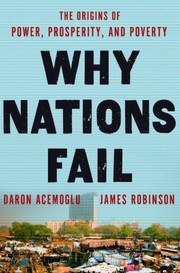
Why Nations Fail

The Origins of Power, Prosperity, and Poverty

Cover via Open Library

Rough AI truth score

67/100

Institutions are crucial and the extractive/inclusive distinction is useful, but the book overreaches when it turns that insight into a universal, nation-sized explanation.

Based on three central claims · medium confidence

The three claims

01Mostly supported

Inclusive political and economic institutions are a major cause of sustained broad-based prosperity.

A large empirical literature links constraints on elites, secure rights, state capacity, and broad opportunity to development. Measurement and reverse causality remain difficult, and different institutional bundles can produce growth.

02Mostly supported

Extractive institutions concentrate power and income, obstruct creative destruction, and tend to undermine durable growth.

Elite capture and weak constraints often depress investment and public capacity, and resource-curse work identifies conditional institutional mechanisms. Extractive regimes can nevertheless generate long growth episodes, making timing and transition mechanisms important.

03Mixed

Geography and culture are broadly inadequate alternatives to an institutional explanation of national success.

Natural experiments and historical reversals show institutions matter beyond geography. The book's near-dismissal is too categorical: disease ecology, resources, trade access, state formation, colonialism, and culture interact with institutions and help explain where they come from.

Other claims worth checking
  • Small institutional differences at critical junctures can create divergent paths.
  • Sustained authoritarian growth is unlikely without political inclusion.

What this number means. It is an AI-generated first-pass judgment of three central factual or causal claims—not a rating, exhaustive fact-check, or human peer review. Claim credits are 100% for supported, 75% for mostly supported, 50% for mixed, and 25% for weak, then averaged and rounded. Lower confidence means the score should move more as better evidence arrives.

Method three-central-claims/0.1.0 · checked 2026-09-01 · 3/3 selected claims assessed · method and source audit