AI ClaimsRapid review

Patrick J. Deneen · 2018

Why Liberalism Failed

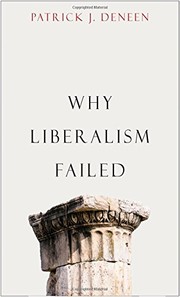
Cover via Open Library

Rough AI truth score

42/100

Deneen identifies real tensions among autonomy, market dependence, state administration, community, and ecological limits. Evidence supports concern about loneliness, distrust, inequality, and institutional concentration, but not his monocausal attribution to liberalism. Liberal democracies also produced extraordinary expansions of rights, health, education, association, and life choice, making 'failure on its own terms' too sweeping.

Based on three central claims · medium confidence

The three claims

01Mixed

Liberalism's emphasis on individual autonomy weakens inherited community, association, family, and place-based obligations.

Mobility, marketization, bureaucratic provision, and autonomy can loosen inherited ties, and many liberal societies report declining trust or association. These outcomes also reflect technology, urbanization, work, demographic change, inequality, policy, and voluntary rejection of oppressive communities; autonomy can enable new associations and chosen commitments.

02Mixed

Liberal market and state institutions jointly produce both greater formal freedom and increasingly centralized public and private power.

Modern liberal orders expanded rights while also building large administrative states and concentrated corporations, so the tension is genuine. Liberal institutions vary widely, include antitrust, federalism, unions, courts, local government, and civil society, and can constrain as well as centralize power.

03Weak

Liberalism has failed on its own terms across liberal democracies rather than producing historically large gains in rights, welfare, longevity, education, and choice.

Dissatisfaction, inequality, ecological strain, community loss, and concentrated power show serious failures and unevenly distributed gains. The counterrecord includes abolition, suffrage, civil and minority rights, longer lives, mass education, lower child mortality, material security, and wider personal choice, while outcomes differ sharply among liberal regimes.

Other claims worth checking
  • Liberal education has shifted from forming citizens toward credentialing workers.
  • Technology promises mastery while increasing dependence on large systems.

What this number means. It is an AI-generated first-pass judgment of three central factual or causal claims—not a rating, exhaustive fact-check, or human peer review. Claim credits are 100% for supported, 75% for mostly supported, 50% for mixed, and 25% for weak, then averaged and rounded. Lower confidence means the score should move more as better evidence arrives.

Method three-central-claims/0.1.0 · checked 2026-09-01 · 3/3 selected claims assessed · method and source audit