AI ClaimsRapid review

Andrew Ross Sorkin · 2009

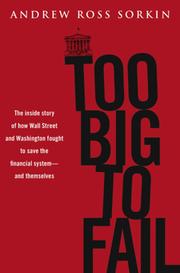
Too Big to Fail

The Inside Story of How Wall Street and Washington Fought to Save the Financial System

Cover via Open Library

Rough AI truth score

92/100

The core chronology of Lehman, AIG, emergency bargaining, and market panic is strongly corroborated. Its access-driven, room-by-room narrative can over-center senior personalities relative to slow-building structural causes and public costs.

Based on three central claims · high confidence

The three claims

02Supported

Officials rescued AIG because its interconnected obligations made an uncontrolled failure more dangerous than Lehman's collapse.

Contemporaneous Federal Reserve explanations identify AIG's global counterparties and credit-protection obligations as systemic channels and describe the feared cascade. Whether the chosen terms best protected the public remains a separate normative question.

03Mostly supported

A handful of senior officials and bankers improvised the decisive rescue architecture over a few extraordinary weeks.

The chronology confirms compressed negotiations and improvised facilities, guarantees, mergers, and capital injections. Congress, central-bank staff, regulators, foreign governments, and preexisting legal constraints also shaped outcomes beyond the book's executive-room cast.

Other claims worth checking
  • Officials lacked a workable resolution regime for systemically important nonbanks.
  • Moral hazard and panic management repeatedly pulled policy in opposite directions.

What this number means. It is an AI-generated first-pass judgment of three central factual or causal claims—not a rating, exhaustive fact-check, or human peer review. Claim credits are 100% for supported, 75% for mostly supported, 50% for mixed, and 25% for weak, then averaged and rounded. Lower confidence means the score should move more as better evidence arrives.

Method three-central-claims/0.1.0 · checked 2026-09-01 · 3/3 selected claims assessed · method and source audit