AI ClaimsRapid review

David McCullough · 2015

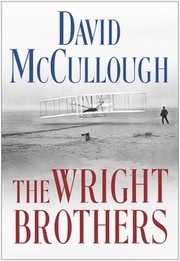
The Wright Brothers

The story of Wilbur and Orville Wright

Cover via Open Library

Rough AI truth score

100/100

The book's central invention story is unusually secure: the 1903 flights, three-axis control, and iterative glider and wind-tunnel program are all well preserved in technical records and artifacts.

Based on three central claims · high confidence

The three claims

01Supported

Wilbur and Orville Wright achieved the first sustained, controlled, powered flight by a piloted heavier-than-air aircraft in December 1903.

Contemporary photographs, witnesses, correspondence, and the surviving Flyer document four flights at Kitty Hawk on December 17, 1903. Earlier experimenters achieved important glides or powered hops, but the Wright flights combined power, a pilot, sustained motion, and control.

02Supported

Their decisive conceptual breakthrough was a practical three-axis control system, not merely adding an engine to a glider.

Wing warping controlled roll, a movable rudder coordinated yaw, and the forward elevator controlled pitch. Smithsonian and NASA technical histories identify controllability and equilibrium as the Wrights' central focus and a key distinction from competing designs.

03Supported

Systematic glider testing and a homemade wind tunnel let the brothers correct bad aerodynamic data and converge on a working design.

After disappointing 1900–1901 gliders, the brothers tested many wing shapes and measured lift and drag with custom balances. The resulting data improved the 1902 glider, while repeated piloting exposed control problems before power was added in 1903.

Other claims worth checking
  • Their bicycle-shop experience contributed practical skills and a culture of iterative testing.
  • Patent conflict later consumed time and damaged relationships within early aviation.

What this number means. It is an AI-generated first-pass judgment of three central factual or causal claims—not a rating, exhaustive fact-check, or human peer review. Claim credits are 100% for supported, 75% for mostly supported, 50% for mixed, and 25% for weak, then averaged and rounded. Lower confidence means the score should move more as better evidence arrives.

Method three-central-claims/0.1.0 · checked 2026-09-01 · 3/3 selected claims assessed · method and source audit