AI ClaimsRapid review

Kate Ascher · 2005

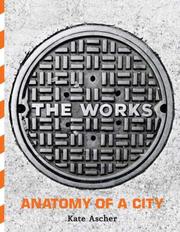
The Works

Anatomy of a City

Cover via Open Library

Rough AI truth score

83/100

Ascher succeeds at making New York's hidden operating systems legible: water, sewers, waste, freight, streets, power, and communications really are vast interdependent networks. The diagrams are a superb 2005 snapshot, not a timeless technical manual; assets, rules, volumes, and operators have changed.

Based on three central claims · medium-high confidence

The three claims

01Supported

A modern city depends on extensive, mostly hidden networks whose routine coordination makes water, sanitation, transport, energy, communications, and waste removal appear effortless.

Current New York agency records document thousands of miles of water and sewer pipes, pumping and treatment assets, large vehicle fleets, and multiple public-private waste flows. The book's systems-level premise remains accurate even as individual components change.

02Supported

New York's water, sewer, and solid-waste systems operate through distinct physical networks whose constraints shape everyday city life and environmental outcomes.

DEP describes over 7,400 miles of sewers, catch basins, pumping stations, treatment limits, and combined overflows; DSNY documents collection fleets, daily material volumes, transfer facilities, and separation rules. These details strongly support Ascher's explanatory approach.

03Mixed

The book's diagrams and operational descriptions remain a current, comprehensive specification of how New York works today.

The physical principles and many legacy assets persist, but a 2005 survey predates major changes in waste export, organics collection, communications, payment, mobility, resilience, climate adaptation, and agency metrics. It is infrastructure literacy, not live operating documentation.

Other claims worth checking
  • Infrastructure literacy changes how residents perceive ordinary streets.
  • System boundaries often cross agencies and the public-private divide.

What this number means. It is an AI-generated first-pass judgment of three central factual or causal claims—not a rating, exhaustive fact-check, or human peer review. Claim credits are 100% for supported, 75% for mostly supported, 50% for mixed, and 25% for weak, then averaged and rounded. Lower confidence means the score should move more as better evidence arrives.

Method three-central-claims/0.1.0 · checked 2026-09-01 · 3/3 selected claims assessed · method and source audit