AI ClaimsRapid review

Adam Smith · 1776

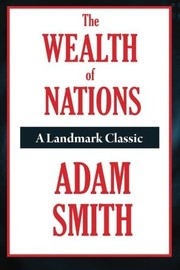
The Wealth of Nations

An Inquiry into the Nature and Causes of the Wealth of Nations

Cover via Open Library

Rough AI truth score

83/100

Smith's account of specialization, market exchange, and institutional foundations remains remarkably durable. The popular caricature of pure laissez-faire is less faithful: Smith also identifies public works, education, justice, and constraints on merchant power as necessary parts of commercial society.

Based on three central claims · high confidence

The three claims

01Supported

Division of labor and specialization can raise productivity, especially as the extent of the market expands.

Smith's pin-factory mechanism has strong modern analogues: occupational evidence links larger markets and technological change to greater specialization and higher manufacturing productivity. The size and direction of causality vary because scale, machinery, skills, and specialization develop together.

02Mostly supported

Voluntary exchange coordinated through prices can channel self-interest toward broad social gains.

Price-guided exchange can coordinate dispersed decisions and support specialization without a central planner, a core mechanism in modern economics. Market power, externalities, information gaps, public goods, and unequal bargaining power mean self-interest does not reliably produce public benefit on its own.

03Mostly supported

Prosperity depends on secure justice, public works, education, and rules that restrain monopoly as well as on competitive markets.

Smith explicitly assigns government roles beyond defense, and later development research consistently links capable institutions and public goods to economic performance. The optimal design and scale of those roles remain historically contingent rather than derivable from one eighteenth-century framework.

Other claims worth checking
  • Mercantilist restrictions often serve producer interests at public expense.
  • Education can offset the narrowing effects of repetitive work.

What this number means. It is an AI-generated first-pass judgment of three central factual or causal claims—not a rating, exhaustive fact-check, or human peer review. Claim credits are 100% for supported, 75% for mostly supported, 50% for mixed, and 25% for weak, then averaged and rounded. Lower confidence means the score should move more as better evidence arrives.

Method three-central-claims/0.1.0 · checked 2026-09-01 · 3/3 selected claims assessed · method and source audit