AI ClaimsRapid review

David Wallace-Wells · 2019

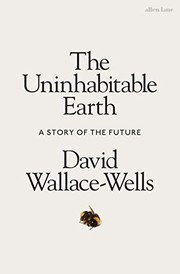
The Uninhabitable Earth

Life After Warming

Cover via Open Library

Rough AI truth score

75/100

The book correctly presents warming as a cascade of compounding risks across health, food, fire, migration, and economies. Its dramatic upper-tail scenarios are physically possible rather than central forecasts, and 'uninhabitable' describes uneven harms, not one uniform planetary threshold.

Based on three central claims · medium-high confidence

The three claims

01Mostly supported

Every additional increment of warming increases multiple, interacting risks rather than adding only a little more heat.

IPCC assessments find escalating and increasingly compound hazards with each increment of warming. Magnitudes, interactions, adaptation, and regional vulnerability remain uncertain, so individual cascades should not be treated as fixed forecasts.

02Mostly supported

Climate change is already increasing serious risks to human health, food systems, infrastructure, and displacement.

Observed heat mortality and damages are clear, and risk rises across interconnected systems. Total future mortality and migration figures depend strongly on emissions, exposure, development, policy, and adaptation.

03Mostly supported

High-end warming scenarios expose genuine catastrophic risks, but they are not the same as the most likely outcome.

Very high warming produces severe and sometimes irreversible risks, while current policy and technology trajectories are not identical to older worst-case emissions pathways. Risk management should retain plausible tails without presenting them as a single forecast.

Other claims worth checking
  • Climate damages are distributed highly unequally.
  • Political imagination affects which climate futures remain possible.

What this number means. It is an AI-generated first-pass judgment of three central factual or causal claims—not a rating, exhaustive fact-check, or human peer review. Claim credits are 100% for supported, 75% for mostly supported, 50% for mixed, and 25% for weak, then averaged and rounded. Lower confidence means the score should move more as better evidence arrives.

Method three-central-claims/0.1.0 · checked 2026-09-01 · 3/3 selected claims assessed · method and source audit