AI ClaimsRapid review

V. S. Ramachandran · 2011

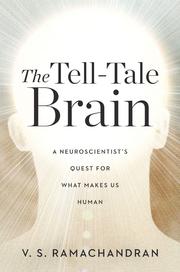
The Tell-Tale Brain

A Neuroscientist's Quest for What Makes Us Human

Cover via Open Library

Rough AI truth score

67/100

The book is strongest when it treats unusual perception as a window into distributed brain organization. It becomes much less secure when suggestive findings about mirror systems, art, language, and human uniqueness are promoted into a unified evolutionary explanation.

Based on three central claims · medium confidence

The three claims

02Mostly supported

Specialized deficits show that perception, body ownership, language, and selfhood depend on partly separable neural systems.

Lesion and case-study evidence supports dissociable components of recognition, navigation, language, attention, and body representation. The inference should remain network-based and probabilistic because lesions disrupt connected systems and singular cases cannot establish a complete architecture.

Other claims worth checking
  • Aesthetic preferences recruit evolved perceptual regularities.
  • Neurological anomalies can illuminate ordinary consciousness.

What this number means. It is an AI-generated first-pass judgment of three central factual or causal claims—not a rating, exhaustive fact-check, or human peer review. Claim credits are 100% for supported, 75% for mostly supported, 50% for mixed, and 25% for weak, then averaged and rounded. Lower confidence means the score should move more as better evidence arrives.

Method three-central-claims/0.1.0 · checked 2026-09-01 · 3/3 selected claims assessed · method and source audit