AI ClaimsRapid review

David Quammen · 2018

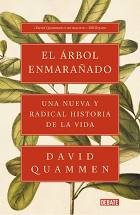
The Tangled Tree

A Radical New History of Life

Cover via Open Library

Rough AI truth score

83/100

Quammen accurately presents horizontal gene transfer, endosymbiosis, and Carl Woese's molecular revolution as complications to a single organismal tree. The strongest rhetoric that the tree of life is simply wrong understates the durable vertical scaffold within a reticulate history.

Based on three central claims · high confidence

The three claims

01Supported

Horizontal gene transfer is pervasive among microbes and gives many genes histories that differ from the organismal lineage carrying them.

Comparative genomics documents extensive transfer of metabolic, resistance, and other genes across bacterial and archaeal lineages. Rates vary among genes and groups, but a single genealogy cannot represent every part of microbial genomes.

02Mostly supported

Carl Woese's ribosomal work revealed Archaea and fundamentally revised the deepest classification of cellular life.

Ribosomal RNA comparisons established a profound archaeal-bacterial split and transformed evolutionary microbiology. Relationships among the three domains, especially eukaryotic origins within or beside Archaea, have continued to be revised.

03Mostly supported

Because genes move horizontally, the tree of life is false and reconstructing deep vertical relationships is generally impossible.

Networks and forests of gene trees are often necessary, especially for microbes, yet conserved informational genes and aggregate signals retain a meaningful vertical scaffold. The tree is incomplete and scale-dependent rather than devoid of historical content.

Other claims worth checking
  • Endosymbiosis made the eukaryotic cell a genomic chimera.
  • Scientific revolutions can be obscured when classification changes seem merely terminological.

What this number means. It is an AI-generated first-pass judgment of three central factual or causal claims—not a rating, exhaustive fact-check, or human peer review. Claim credits are 100% for supported, 75% for mostly supported, 50% for mixed, and 25% for weak, then averaged and rounded. Lower confidence means the score should move more as better evidence arrives.

Method three-central-claims/0.1.0 · checked 2026-09-01 · 3/3 selected claims assessed · method and source audit