AI ClaimsRapid review

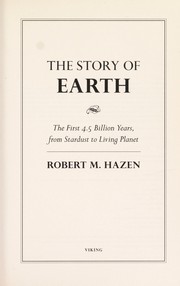
Robert M. Hazen · 2012

The Story of Earth

The First 4.5 Billion Years, from Stardust to Living Planet

Cover via Open Library

Rough AI truth score

75/100

Its mineral-evolution thesis is a productive, well-supported way to organize planetary history, and life clearly transformed near-surface mineral diversity. The staged sequence and some early-Earth causal links remain models reconstructed from a sparse and altered record.

Based on three central claims · medium-high confidence

The three claims

01Mostly supported

Earth's mineral diversity increased over time as new planetary processes created new chemical and physical environments.

Condensation, differentiation, water-rock interaction, plate processes, oxidation, and biology open new mineral-forming pathways. Catalog completeness, preservation, and the boundaries between stages add uncertainty to exact counts.

Other claims worth checking
  • Minerals can serve as historical signatures of planetary evolution.
  • Earth's mineral inventory may help frame the search for life elsewhere.

What this number means. It is an AI-generated first-pass judgment of three central factual or causal claims—not a rating, exhaustive fact-check, or human peer review. Claim credits are 100% for supported, 75% for mostly supported, 50% for mixed, and 25% for weak, then averaged and rounded. Lower confidence means the score should move more as better evidence arrives.

Method three-central-claims/0.1.0 · checked 2026-09-01 · 3/3 selected claims assessed · method and source audit