AI ClaimsRapid review

Richard Wilkinson and Kate Pickett · 2009

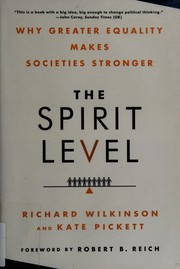
The Spirit Level

Why Greater Equality Makes Societies Stronger

Cover via Open Library

Rough AI truth score

50/100

A broad literature supports an association between income inequality and several health or social outcomes, and updated work reproduces part of the book's composite pattern. The book overstates causal identification. Poverty, welfare institutions, education, race, measurement choices, history, and policy interact with inequality, while the proposed status-stress pathway varies by outcome.

Based on three central claims · high confidence

The three claims

01Mostly supported

Among rich societies, higher income inequality is associated with worse population health and a broader bundle of social problems.

Many multilevel and cross-national studies report associations with mortality, health, trust, violence, and composite social-harm measures, and an updated replication recovers part of the original relationship. Effect sizes and robustness differ by outcome, geography, period, inequality measure, and controls.

02Mixed

Status competition, chronic stress, and weaker trust mediate an independent causal effect of inequality beyond absolute deprivation.

Psychosocial stress, social comparison, trust, and status are plausible mechanisms with supporting observational and biological evidence. Poverty and material resources also matter, mediators are difficult to identify, and aggregate cross-sections cannot establish that inequality independently causes each individual outcome.

03Weak

Inequality alone is the dominant general explanation for the book's cross-national and U.S. state-level outcome patterns.

Distribution is an important common cause candidate, but models that add poverty and configurations of other causes substantially change the pattern. Welfare institutions, racial history, health systems, education, crime policy, demographics, measurement, and reverse causality prevent one-variable dominance.

Other claims worth checking
  • More equal societies may sustain higher trust and cooperation.
  • Child wellbeing and social mobility can vary with the income distribution.

What this number means. It is an AI-generated first-pass judgment of three central factual or causal claims—not a rating, exhaustive fact-check, or human peer review. Claim credits are 100% for supported, 75% for mostly supported, 50% for mixed, and 25% for weak, then averaged and rounded. Lower confidence means the score should move more as better evidence arrives.

Method three-central-claims/0.1.0 · checked 2026-09-01 · 3/3 selected claims assessed · method and source audit