AI ClaimsRapid review

Amanda Ripley · 2013

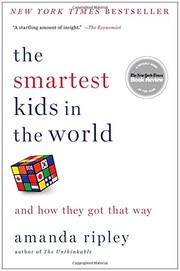
The Smartest Kids in the World

And How They Got That Way

Cover via Open Library

Rough AI truth score

67/100

Ripley's reporting usefully highlights rigor, teacher preparation, coherent systems, and differences in student expectations. The country narratives are vivid but observational: PISA supports careful comparison, not a causal ranking of national practices, and each system contains substantial internal variation and tradeoffs.

Based on three central claims · medium confidence

The three claims

01Mostly supported

Some high-performing education systems combine demanding academic expectations with coherent curricula and serious preparation or selection of teachers.

International reports document real differences in teacher policy, curriculum, and performance, and these features plausibly reinforce one another. Countries vary internally, reforms change over time, and high scores cannot isolate which policy bundle caused the observed outcomes.

02Mostly supported

Academic rigor and a culture that treats intellectual effort as consequential can improve student engagement and achievement.

High expectations, suitable challenge, feedback, and mastery-oriented climates are associated with stronger learning. Rigor can become exclusion or unproductive stress when not paired with support, and cultural narratives cannot be cleanly separated from selection, resources, curriculum, and labor markets.

03Mixed

PISA results and a small set of student experiences identify which national education practices make children smarter and should be transplanted elsewhere.

PISA provides valuable standardized evidence, and immersive cases reveal mechanisms statistics miss. OECD itself cautions that cross-sectional associations do not establish causality, comparability is imperfect, and policies interact with institutions, demographics, curricula, welfare systems, and selection.

Other claims worth checking
  • Sports and other extracurriculars occupy different positions across school cultures.
  • International comparison can expose assumptions that appear natural inside one system.

What this number means. It is an AI-generated first-pass judgment of three central factual or causal claims—not a rating, exhaustive fact-check, or human peer review. Claim credits are 100% for supported, 75% for mostly supported, 50% for mixed, and 25% for weak, then averaged and rounded. Lower confidence means the score should move more as better evidence arrives.

Method three-central-claims/0.1.0 · checked 2026-09-01 · 3/3 selected claims assessed · method and source audit