AI ClaimsRapid review

Richard Dawkins · 1976

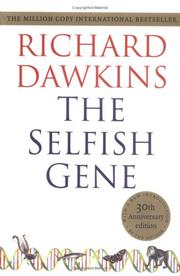
The Selfish Gene

Cover via Open Library

Rough AI truth score

75/100

The gene's-eye perspective remains a powerful account of inheritance, kin selection, conflict, and cooperation. Treating it as the uniquely correct causal level or extending the meme analogy into a mature science goes beyond the consensus.

Based on three central claims · high confidence

The three claims

01Mostly supported

Natural selection can often be understood most clearly by tracking replicating genetic variants through the organisms that carry them.

Population genetics and selfish genetic elements validate gene-centered bookkeeping and causal analysis in many cases. Organisms, groups, development, ecology, and multilevel selection can remain indispensable complementary levels rather than mere illusions.

02Mostly supported

Apparent altruism can evolve when behavior increases the propagation of shared genes through relatives or reciprocating partners.

Inclusive fitness, kin selection, reciprocal cooperation, and related frameworks explain many costly social behaviors. Their empirical importance varies by system, and gene-centered and multilevel formulations can sometimes describe the same evolutionary dynamics.

03Mostly supported

Cultural units called memes replicate, mutate, and compete closely enough like genes to ground a general predictive science of culture.

Cultural transmission clearly involves differential copying, modification, and persistence, and the meme metaphor proved influential. Boundaries, fidelity, mechanisms, agency, and measurement are far less determinate than for genes, limiting strong predictive versions of memetics.

Other claims worth checking
  • Genes need not produce psychologically selfish organisms.
  • Conflict among genetic elements can occur within a single genome.

What this number means. It is an AI-generated first-pass judgment of three central factual or causal claims—not a rating, exhaustive fact-check, or human peer review. Claim credits are 100% for supported, 75% for mostly supported, 50% for mixed, and 25% for weak, then averaged and rounded. Lower confidence means the score should move more as better evidence arrives.

Method three-central-claims/0.1.0 · checked 2026-09-01 · 3/3 selected claims assessed · method and source audit