AI ClaimsRapid review

Steven Shapin · 1996

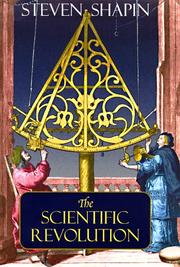
The Scientific Revolution

Cover via Open Library

Rough AI truth score

75/100

Shapin persuasively replaces a single, clean revolution with contested changes in natural knowledge, instruments, credibility, institutions, and metaphysics. His social history corrects heroic discovery narratives without making nature or experimental success irrelevant; the period remains transformative even if its boundaries were porous.

Based on three central claims · medium-high confidence

The three claims

01Mostly supported

There was no single, universally defined Scientific Revolution with one method, date, location, or uniformly shared intellectual program.

Historians document uneven changes across astronomy, mechanics, medicine, natural history, experiment, mathematics, and institutions over multiple centuries. The term still identifies a useful cluster of transformations, so rejecting one essence need not erase major discontinuities.

02Mostly supported

New scientific knowledge depended on social practices for establishing trustworthy witnesses, credible testimony, disciplined experiment, and gentlemanly authority.

Laboratory records, societies, correspondence, publication, replication, instruments, and status shaped which claims became credible. Social organization does not imply that all accepted findings were arbitrary; material intervention and predictive success constrained communities unevenly but powerfully.

03Mostly supported

Changing ideas about nature, knowledge, and social order were historically entangled rather than separable into pure internal science and external context.

The period links religious commitments, patronage, commerce, state power, craft, instruments, colonial collection, and mathematical argument. Contextual explanation can illuminate research agendas and credibility without reducing the content of successful theories to social interests.

Other claims worth checking
  • Mechanical philosophy changed what counted as an acceptable account of nature.
  • Historical actors did not use today's stable boundary between science and nonscience.

What this number means. It is an AI-generated first-pass judgment of three central factual or causal claims—not a rating, exhaustive fact-check, or human peer review. Claim credits are 100% for supported, 75% for mostly supported, 50% for mixed, and 25% for weak, then averaged and rounded. Lower confidence means the score should move more as better evidence arrives.

Method three-central-claims/0.1.0 · checked 2026-09-01 · 3/3 selected claims assessed · method and source audit