AI ClaimsRapid review

Mancur Olson · 1982

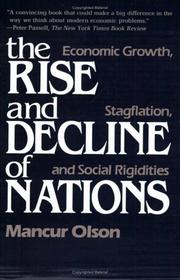
The Rise and Decline of Nations

Economic Growth, Stagflation, and Social Rigidities

Cover via Open Library

Rough AI truth score

50/100

Olson offers a powerful mechanism: organized groups can seek concentrated benefits whose costs are spread across society. The mechanism is real, but the macro growth thesis is underidentified. Coalitions can also coordinate investment and wage restraint, and postwar growth differences reflect global position, reconstruction, institutions, technology, demographics, policy, and catch-up as well as coalition disruption.

Based on three central claims · medium-high confidence

The three claims

01Mostly supported

Stable societies accumulate narrow distributional coalitions that seek concentrated benefits while diffusing costs.

Collective-action asymmetry makes concentrated beneficiaries easier to organize than diffuse payers, a durable insight supported in lobbying, regulation, and rent-seeking research. Organizations also provide information, representation, insurance, standards, bargaining, and coordination, so age and stability do not turn every group into a net social cost.

02Mixed

Accumulated distributional coalitions slow decision-making, reduce adaptation, and lower economic growth.

Vetoes, protection, entry barriers, subsidies, and regulatory capture can impede reallocation and productivity. Some encompassing organizations support training, innovation, wage coordination, social insurance, and durable bargains; causal estimates depend on which coalition, institutional setting, and growth channel is measured.

03Weak

Postwar growth differences across Britain, Germany, Japan, and other nations are explained mainly by how war disrupted accumulated coalitions.

War plausibly reset organizations and rules in Germany and Japan while leaving more continuity in Britain, making Olson's comparison suggestive. Detailed comparative work finds the international system, catch-up potential, reconstruction, finance, industrial policy, trade, demographics, and domestic institutions explain much more than coalition age alone.

Other claims worth checking
  • Encompassing organizations may internalize more of the social costs of their demands.
  • Institutional sclerosis can accumulate gradually in politically stable societies.

What this number means. It is an AI-generated first-pass judgment of three central factual or causal claims—not a rating, exhaustive fact-check, or human peer review. Claim credits are 100% for supported, 75% for mostly supported, 50% for mixed, and 25% for weak, then averaged and rounded. Lower confidence means the score should move more as better evidence arrives.

Method three-central-claims/0.1.0 · checked 2026-09-01 · 3/3 selected claims assessed · method and source audit