AI ClaimsRapid review

Joseph E. Stiglitz · 2012

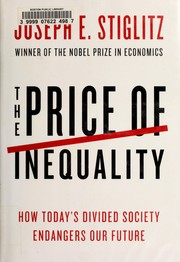
The Price of Inequality

How Today's Divided Society Endangers Our Future

Cover via Open Library

Rough AI truth score

75/100

Stiglitz's central mechanisms are well supported: opportunity differs sharply across families and places, concentrated resources can translate into organized policy influence, and inequality can impair human capital, stability, trust, and growth. Specific causal shares and remedies remain contestable, but the evidence rejects a simple tradeoff in which redistribution or broad public investment must reduce durable growth.

Based on three central claims · high confidence

The three claims

01Mostly supported

High inequality weakens economic mobility and causes unequal opportunity to persist across generations and places.

Administrative data show large geographic and family-background differences in mobility, and opportunity correlates with segregation, school quality, social capital, family structure, and inequality. Rank mobility was stable across several U.S. cohorts despite rising inequality, and causal pathways are multiple rather than distribution alone.

02Mostly supported

Concentrated wealth increases political influence and helps shape rules that preserve rents and further inequality.

Policy-preference studies, lobbying, campaign finance, regulatory capture, and concentrated-benefit mechanisms support disproportionate influence by affluent citizens and organized business. Influence varies by issue and institution, preferences correlate across income groups, and observational policy data do not prove every unequal outcome was purchased.

03Mostly supported

Reducing inequality through well-designed taxes, transfers, education, competition, and public investment can improve rather than necessarily reduce durable growth.

Cross-country IMF work finds lower net inequality associated with faster and more durable growth and generally little direct growth penalty from non-extreme redistribution. These are observational macro estimates, policy composition matters, and poorly designed taxes, transfers, regulation, or spending can still damage incentives and capacity.

Other claims worth checking
  • Rent seeking can increase both market inequality and political inequality.
  • Macroeconomic instability and weak demand can be amplified when gains concentrate at the top.

What this number means. It is an AI-generated first-pass judgment of three central factual or causal claims—not a rating, exhaustive fact-check, or human peer review. Claim credits are 100% for supported, 75% for mostly supported, 50% for mixed, and 25% for weak, then averaged and rounded. Lower confidence means the score should move more as better evidence arrives.

Method three-central-claims/0.1.0 · checked 2026-09-01 · 3/3 selected claims assessed · method and source audit