AI ClaimsRapid review

Deborah Blum · 2010

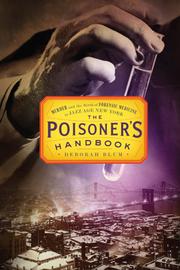
The Poisoner's Handbook

Murder and the Birth of Forensic Medicine in Jazz Age New York

Cover via Open Library

Rough AI truth score

92/100

Norris and Gettler's institutional and technical contributions, along with the poisoned-alcohol crisis, are well documented. The book reasonably treats them as foundational while simplifying a broader national history of forensic medicine.

Based on three central claims · medium-high confidence

The three claims

01Supported

Charles Norris and Alexander Gettler helped professionalize forensic toxicology in New York City after 1918.

Norris became the city's first chief medical examiner in 1918 and hired Gettler to lead toxicology. Their laboratory developed and applied chemical methods to identify poisons in tissues, replacing a patronage coroner system with more systematic medical investigation.

02Supported

Prohibition-era use and intensified denaturing of industrial alcohol contributed to preventable mass poisonings.

Bootleggers diverted industrial alcohol into drinks, while federal formulas deliberately made it unpalatable or toxic and were strengthened in the 1920s. Methanol and other contaminants killed and blinded consumers, and Norris publicly attacked the policy.

03Mostly supported

The New York laboratory was a foundational turning point for American forensic medicine, even though early toxicology still had serious limits.

Norris and Gettler created influential methods, testimony, training, and institutional credibility at a crucial moment. Yet forensic toxicology had earlier roots elsewhere, and analytical detection did not eliminate sampling errors, uncertain dose interpretation, or contested causation.

Other claims worth checking
  • Carbon monoxide, radium, lead, and thallium cases exposed gaps between industrial innovation and public health.
  • Forensic evidence gained authority through institutions and courtroom practice, not laboratory technique alone.

What this number means. It is an AI-generated first-pass judgment of three central factual or causal claims—not a rating, exhaustive fact-check, or human peer review. Claim credits are 100% for supported, 75% for mostly supported, 50% for mixed, and 25% for weak, then averaged and rounded. Lower confidence means the score should move more as better evidence arrives.

Method three-central-claims/0.1.0 · checked 2026-09-01 · 3/3 selected claims assessed · method and source audit