AI ClaimsRapid review

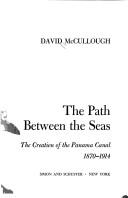
David McCullough · 1977

The Path Between the Seas

The Creation of the Panama Canal, 1870–1914

Cover via Open Library

Rough AI truth score

83/100

McCullough's central account of French failure, mosquito control, railroad logistics, locks, excavation, and U.S. completion is strongly documented. Its achievement narrative needs to remain paired with Panamanian sovereignty, displacement, racialized labor systems, and imperial power.

Based on three central claims · high confidence

The three claims

01Supported

The French canal effort failed amid an unsuitable sea-level design, landslides, financial disorder, and catastrophic tropical disease.

The Panama Canal Authority documents the sea-level plan, excavation problems, slides, organizational failures, malaria, yellow fever, and an incompletely recorded death toll. These interacting causes match the book's central explanation.

02Supported

Mosquito control, sanitation, railroad logistics, and a lock-canal design enabled the successful U.S. construction effort.

Official canal history records the dramatic decline in malaria, elimination of yellow fever, rebuilt railroad, managed supply system, and unprecedented lock engineering. Completion was a systems achievement rather than excavation alone.

03Mixed

The canal's creation is best understood mainly as a heroic American engineering triumph.

Engineering, medicine, and organization were extraordinary, and tens of thousands of workers made them real. U.S. intervention in Panamanian sovereignty, segregated labor, displacement, casualties, and unequal control are essential parts of the same history.

Other claims worth checking
  • The canal reorganized global shipping distances.
  • Public health capacity was infrastructure for megaproject construction.

What this number means. It is an AI-generated first-pass judgment of three central factual or causal claims—not a rating, exhaustive fact-check, or human peer review. Claim credits are 100% for supported, 75% for mostly supported, 50% for mixed, and 25% for weak, then averaged and rounded. Lower confidence means the score should move more as better evidence arrives.

Method three-central-claims/0.1.0 · checked 2026-09-01 · 3/3 selected claims assessed · method and source audit