AI ClaimsRapid review

Barry Schwartz · 2004

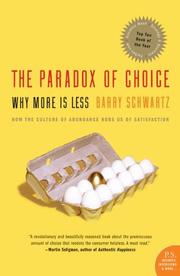
The Paradox of Choice

Why More Is Less

Cover via Open Library

Rough AI truth score

50/100

The book identifies a real phenomenon: under some conditions, larger assortments increase search costs, deferral, regret, or dissatisfaction. But the popular universal version of choice overload is not supported. Meta-analyses find highly variable and sometimes null average effects, with outcomes depending on preference uncertainty, task difficulty, option structure, and expertise.

Based on three central claims · medium confidence

The three claims

01Mostly supported

Large choice sets can reduce selection or satisfaction by increasing cognitive cost and anticipated regret.

Choice-overload effects occur in many studies, especially when options are difficult to compare, preferences are unclear, and decision effort is high. The effect is conditional rather than automatic, and larger sets can improve matching when consumers know what they want.

02Mixed

Modern abundance broadly makes people less happy and more prone to paralysis and self-blame.

More options can raise expectations, regret, and responsibility, but aggregate well-being depends on income, autonomy, institutions, social comparison, and the design of defaults. Evidence does not support a simple monotonic relationship between number of options and unhappiness.

Other claims worth checking
  • Maximizers may experience more regret than satisficers.
  • Defaults and curated menus can preserve choice while reducing friction.

What this number means. It is an AI-generated first-pass judgment of three central factual or causal claims—not a rating, exhaustive fact-check, or human peer review. Claim credits are 100% for supported, 75% for mostly supported, 50% for mixed, and 25% for weak, then averaged and rounded. Lower confidence means the score should move more as better evidence arrives.

Method three-central-claims/0.1.0 · checked 2026-09-01 · 3/3 selected claims assessed · method and source audit