AI ClaimsRapid review

Jeffrey Toobin · 2007

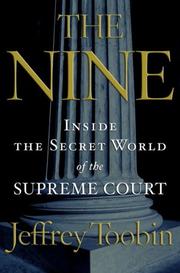
The Nine

Inside the Secret World of the Supreme Court

Cover via Open Library

Rough AI truth score

67/100

Toobin offers a useful institutional portrait of a Court whose outcomes are shaped by appointments, judicial philosophy, coalition building, and pivotal justices. The public voting record supports those broad patterns, while confident narratives about private motives and causal influence depend on selective access and cannot be independently tested as cleanly as decisions and votes.

Based on three central claims · medium-high confidence

The three claims

01Mostly supported

Supreme Court outcomes are shaped by justices' legal philosophies, ideological alignments, and the appointing coalition as well as by precedent and text.

Systematic vote data shows durable differences among justices and issue areas, and appointment changes alter the Court's median. Legal materials, case selection, institutional legitimacy, doctrine, facts, and strategic interaction also constrain outcomes, so votes are not reducible to party labels.

02Mostly supported

A pivotal or median justice can exercise unusual influence by determining which coalition forms and how narrowly an opinion is written.

Closely divided cases and observable vote coalitions support the importance of pivotal positions, and opinion assignment and bargaining can affect doctrine. The median varies by issue and legal dimension, while agenda setting, lower courts, case facts, and multiple potential coalitions complicate a single swing-vote model.

03Mixed

Interviews and reported private interactions can reliably reveal why individual justices reached particular legal conclusions.

Contemporaneous accounts can illuminate relationships, bargaining, and institutional culture, especially when triangulated. Sources are selective, memories and incentives differ, confidentiality limits verification, and a vivid private story may not establish the causal reason for a vote or doctrinal choice.

Other claims worth checking
  • Lifetime appointments make presidential election consequences unusually durable.
  • Personal relationships can affect coalition maintenance without determining every vote.

What this number means. It is an AI-generated first-pass judgment of three central factual or causal claims—not a rating, exhaustive fact-check, or human peer review. Claim credits are 100% for supported, 75% for mostly supported, 50% for mixed, and 25% for weak, then averaged and rounded. Lower confidence means the score should move more as better evidence arrives.

Method three-central-claims/0.1.0 · checked 2026-09-01 · 3/3 selected claims assessed · method and source audit