AI ClaimsRapid review

Hernando de Soto · 2000

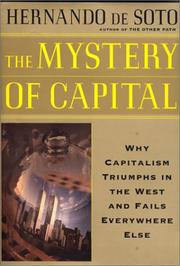
The Mystery of Capital

Why Capitalism Triumphs in the West and Fails Everywhere Else

Cover via Open Library

Rough AI truth score

58/100

De Soto correctly centers the legal and administrative systems that make assets transferable and defensible. Formal title often improves security and investment, but the stronger promise that titling alone unlocks vast collateral credit and reproduces Western development is not borne out consistently.

Based on three central claims · medium confidence

The three claims

01Mostly supported

Poor households often possess valuable assets through informal arrangements that formal legal systems do not fully recognize.

Urban and rural tenure research documents extensive informal ownership and overlapping customary, community, and statutory claims. Calling all such assets dead capital oversimplifies functioning local systems, and recognition must protect rather than erase existing rights.

02Mixed

Formal property titles substantially expand poor owners' access to collateral credit and thereby unlock economic growth.

Titling can strengthen tenure and sometimes increase investment, but systematic reviews find weak or mixed credit effects because lenders also require income, enforcement, information, and functioning markets. Formalization may even expose vulnerable claimants when adjudication is unequal.

03Mixed

The West became prosperous primarily by integrating dispersed property claims into one representational legal system.

Registries, standardized rights, and contract enforcement clearly aided exchange and investment. Western growth also depended on state capacity, education, finance, technology, empire, political bargaining, and public infrastructure, making a single property-system explanation historically incomplete.

Other claims worth checking
  • Business licensing costs push activity into informality.
  • Property records connect citizens to public and private institutions.

What this number means. It is an AI-generated first-pass judgment of three central factual or causal claims—not a rating, exhaustive fact-check, or human peer review. Claim credits are 100% for supported, 75% for mostly supported, 50% for mixed, and 25% for weak, then averaged and rounded. Lower confidence means the score should move more as better evidence arrives.

Method three-central-claims/0.1.0 · checked 2026-09-01 · 3/3 selected claims assessed · method and source audit