AI ClaimsRapid review

Oliver Sacks · 1985

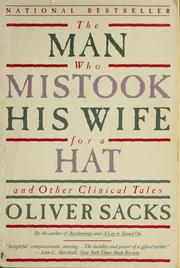
The Man Who Mistook His Wife for a Hat

And Other Clinical Tales

Cover via Open Library

Rough AI truth score

75/100

Sacks accurately conveys that selective neurological damage can fracture abilities that feel unitary and that clinical lives cannot be reduced to test scores. The cases are interpretive narratives, however, not controlled demonstrations of a universal map from lesion to personhood.

Based on three central claims · medium-high confidence

The three claims

01Supported

Focal neurological damage can selectively disrupt recognition, memory, language, or body awareness while sparing other abilities.

A large neuropsychological literature documents dissociations among recognition, navigation, language, memory, and body representation. Modern work refines the anatomical stories into distributed networks but strongly supports the book's foundational claim of selective impairment.

02Supported

A person's everyday adaptation can differ substantially from what a decontextualized neurological test suggests.

Research on ecological validity finds that many neuropsychological tests predict daily function only moderately and work best when tasks match the real-world domain. Sacks's attention to routines, relationships, art, and compensation is therefore a substantive clinical strength.

03Weak

Individual case narratives can by themselves reveal the general neural organization of identity and consciousness.

Single cases can generate and sometimes sharply constrain hypotheses, but lesion extent, premorbid differences, compensation, medication, and narrative selection limit generalization. Systematic classifications require many cases and standardized measures beyond a compelling clinical portrait.

Other claims worth checking
  • Music can remain meaningful despite profound cognitive impairment.
  • Clinical care should preserve the patient's lived identity, not only classify deficits.

What this number means. It is an AI-generated first-pass judgment of three central factual or causal claims—not a rating, exhaustive fact-check, or human peer review. Claim credits are 100% for supported, 75% for mostly supported, 50% for mixed, and 25% for weak, then averaged and rounded. Lower confidence means the score should move more as better evidence arrives.

Method three-central-claims/0.1.0 · checked 2026-09-01 · 3/3 selected claims assessed · method and source audit