AI ClaimsRapid review

E. P. Thompson · 1963

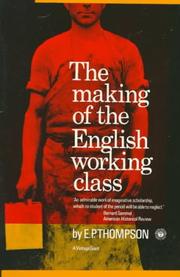
The Making of the English Working Class

Cover via Open Library

Rough AI truth score

75/100

Thompson's recovery of working people as historical agents and class as a relationship remade social history. His English, male, artisanal, and politically radical center leaves major parts of industrial working-class formation outside the frame.

Based on three central claims · medium-high confidence

The three claims

01Supported

The English working class was made through shared experience, organization, culture, and conflict rather than produced automatically by factories or income categories.

The relational concept of class and attention to association, religion, custom, and political language remain foundational. Later scholars have broadened the actors and mechanisms without overturning the central agency claim.

02Mostly supported

Between roughly 1780 and 1832, artisans and laborers developed a recognizable working-class consciousness through repression, Methodism, radicalism, and economic change.

The period saw dense associational growth, radical politics, industrial transformation, and shared languages of class. Consciousness was uneven by region, occupation, gender, religion, and generation and did not reach one completed form in 1832.

Other claims worth checking
  • Methodism both disciplined workers and supplied organizational resources.
  • The moral economy shaped resistance to market discipline.

What this number means. It is an AI-generated first-pass judgment of three central factual or causal claims—not a rating, exhaustive fact-check, or human peer review. Claim credits are 100% for supported, 75% for mostly supported, 50% for mixed, and 25% for weak, then averaged and rounded. Lower confidence means the score should move more as better evidence arrives.

Method three-central-claims/0.1.0 · checked 2026-09-01 · 3/3 selected claims assessed · method and source audit