AI ClaimsRapid review

Richard Rhodes · 1986

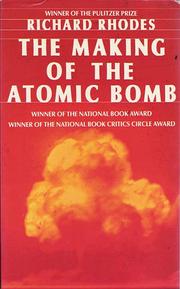
The Making of the Atomic Bomb

The definitive history of nuclear fission and the Manhattan Project

Cover via Open Library

Rough AI truth score

92/100

Rhodes's scientific and institutional history closely matches the official record. Its sweeping narrative necessarily compresses a huge multinational research and industrial system, but the central account is unusually strong.

Based on three central claims · high confidence

The three claims

01Supported

The discovery of nuclear fission and the possibility of a self-sustaining chain reaction made an atomic bomb physically plausible.

Fission releases energy and additional neutrons, creating the possibility that one event triggers more. Wartime research first had to establish material properties, neutron behavior, and whether a controllable or explosive chain reaction could be sustained.

02Supported

Chicago Pile-1 achieved the first controlled self-sustaining nuclear chain reaction on December 2, 1942.

The Met Lab record identifies Fermi's graphite-and-uranium pile under Stagg Field as the first reactor to reach a self-sustaining chain reaction. The demonstration supplied essential proof for scaled plutonium production at Hanford.

03Mostly supported

The bomb was produced by an unprecedented integration of basic science, military administration, engineering, and industrial production.

The Manhattan Project coordinated laboratories, uranium enrichment, plutonium production, weapon design, and vast construction under wartime secrecy. Calling it unprecedented is interpretive, but its speed, scale, and parallel technical pathways are firmly documented.

Other claims worth checking
  • Refugee scientists and international scientific networks were central to the project's origins.
  • The decision to use the bombs involved military, diplomatic, ethical, and bureaucratic judgments that remain disputed.

What this number means. It is an AI-generated first-pass judgment of three central factual or causal claims—not a rating, exhaustive fact-check, or human peer review. Claim credits are 100% for supported, 75% for mostly supported, 50% for mixed, and 25% for weak, then averaged and rounded. Lower confidence means the score should move more as better evidence arrives.

Method three-central-claims/0.1.0 · checked 2026-09-01 · 3/3 selected claims assessed · method and source audit