AI ClaimsRapid review

Philip G. Zimbardo · 2007

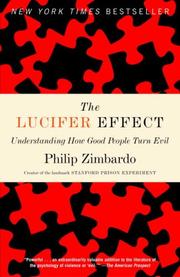
The Lucifer Effect

Understanding How Good People Turn Evil

Cover via Open Library

Rough AI truth score

42/100

The broad lesson that roles, authority, norms, leadership, and institutional design can enable abuse is well supported. The book's signature evidence is not. The Stanford Prison Experiment lacked a clean control, involved experimenter direction and role ambiguity, and did not replicate in the BBC study. It cannot by itself establish spontaneous guard brutality or serve as a direct causal model of Abu Ghraib.

Based on three central claims · high confidence

The three claims

01Mostly supported

Situational roles, authority, norms, leadership, and institutional design can strongly influence harmful behavior.

Research on obedience, conformity, role identification, deindividuation, organizations, and prisons supports substantial situational influence. Effects are heterogeneous and interact with personality, ideology, group identification, incentives, leadership, selection, resistance, and the meaning participants assign to a setting.

02Weak

The Stanford Prison Experiment validly demonstrated ordinary people spontaneously becoming abusive guards because of assigned roles.

The study had a tiny selected sample, no adequate control, experimenter involvement, demand characteristics, uneven guard behavior, and role instructions that undermine spontaneous-emergence claims. A later BBC study produced materially different group dynamics, so the iconic interpretation is not a robust experimental finding.

03Weak

Stanford Prison dynamics generalize directly to Abu Ghraib and other real-world atrocities.

Abu Ghraib involved war, command policy, training, intelligence demands, impunity, ideology, leadership failure, and individual agency absent from the simulation. The Stanford study can suggest questions about institutions, but its design cannot identify the causes or relative weight of mechanisms in a real prison or atrocity.

Other claims worth checking
  • Heroism can be encouraged through institutional and identity design.
  • Bad systems do not remove individual or command responsibility.

What this number means. It is an AI-generated first-pass judgment of three central factual or causal claims—not a rating, exhaustive fact-check, or human peer review. Claim credits are 100% for supported, 75% for mostly supported, 50% for mixed, and 25% for weak, then averaged and rounded. Lower confidence means the score should move more as better evidence arrives.

Method three-central-claims/0.1.0 · checked 2026-09-01 · 3/3 selected claims assessed · method and source audit