AI ClaimsRapid review

David Grann · 2009

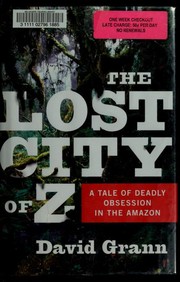
The Lost City of Z

A Tale of Deadly Obsession in the Amazon

Cover via Open Library

Rough AI truth score

75/100

Fawcett's expeditions and disappearance are well documented, and archaeology vindicates his broad intuition that Amazonia supported complex settlements. No evidence identifies one excavated center as his exact Z or resolves his fate.

Based on three central claims · medium-high confidence

The three claims

01Supported

Percy Fawcett, his son Jack, and Raleigh Rimell disappeared in 1925 while searching Brazil's interior for a complex civilization Fawcett called Z.

Fawcett's correspondence and expedition record establish the party's route, purpose, and final communications from the Upper Xingu. Later searches produced stories and speculation but no verified remains or conclusive account of their deaths.

02Supported

Pre-Columbian Amazonia supported populous, planned settlements that substantially modified forests and landscapes.

Archaeology, lidar, earthworks, roads, managed soils, and ecological proxies document large and connected Indigenous settlements in several Amazon regions. The evidence rejects an old image of a uniformly pristine forest incapable of complex societies.

Other claims worth checking
  • Fawcett combined exceptional surveying skill with spiritualism and racial assumptions.
  • Repeated rescue and search expeditions enlarged the human cost of the mystery.

What this number means. It is an AI-generated first-pass judgment of three central factual or causal claims—not a rating, exhaustive fact-check, or human peer review. Claim credits are 100% for supported, 75% for mostly supported, 50% for mixed, and 25% for weak, then averaged and rounded. Lower confidence means the score should move more as better evidence arrives.

Method three-central-claims/0.1.0 · checked 2026-09-01 · 3/3 selected claims assessed · method and source audit