AI ClaimsRapid review

Mancur Olson · 1965

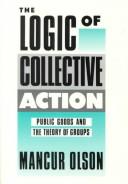
The Logic of Collective Action

Public Goods and the Theory of Groups

Cover via Open Library

Rough AI truth score

67/100

Olson's free-rider problem and selective-incentive solution remain foundational. The simple group-size prediction is too strong: large groups sometimes cooperate when communication, identity, repetition, norms, leadership, technology, or perceived effectiveness changes the game. The enduring contribution is a conditional mechanism, not a law that small groups always outperform large ones.

Based on three central claims · high confidence

The three claims

01Mostly supported

Individuals can rationally free-ride when a group's public good is non-excludable and one contribution has little effect on provision.

Public-goods experiments and organizational evidence repeatedly observe reduced contribution when benefits are non-excludable and individual efficacy is low. People also cooperate through reciprocity, norms, identity, altruism, communication, punishment, repeated interaction, and mistaken beliefs, so narrow material rationality is not exhaustive.

02Mixed

Smaller groups organize more readily than larger latent groups because individual stakes and observability are greater.

Small groups can make contributions consequential, monitoring easier, and bargaining cheaper. Large-group experiments show successful provision under some payoff and salience conditions, while digital coordination, nested organization, networks, and strong identities can offset size; group size is not independently decisive.

03Mostly supported

Large groups usually require selective incentives, coercion, or organizational entrepreneurs to provide collective goods.

Dues-linked services, professional staff, leadership, enforcement, social rewards, reputational benefits, and institutional mandates commonly sustain unions, associations, parties, and international cooperation. Intrinsic motivation, norms, crisis, communication, and repeated interaction can also mobilize large groups without formal coercion.

Other claims worth checking
  • Privileged groups may provide a collective good because one member gains enough to bear the cost.
  • Organizations often sell private benefits to finance collective representation.

What this number means. It is an AI-generated first-pass judgment of three central factual or causal claims—not a rating, exhaustive fact-check, or human peer review. Claim credits are 100% for supported, 75% for mostly supported, 50% for mixed, and 25% for weak, then averaged and rounded. Lower confidence means the score should move more as better evidence arrives.

Method three-central-claims/0.1.0 · checked 2026-09-01 · 3/3 selected claims assessed · method and source audit