AI ClaimsRapid review

Natalie Wexler · 2019

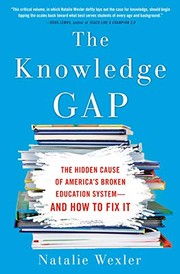
The Knowledge Gap

The Hidden Cause of America's Broken Education System—and How to Fix It

Cover via Open Library

Rough AI truth score

75/100

Wexler is right that comprehension depends heavily on vocabulary and background knowledge and that content-rich curricula deserve more attention. Calling knowledge neglect the hidden cause of American failure is too singular: decoding, language, attendance, poverty, disability, school quality, and instruction all contribute.

Based on three central claims · medium-high confidence

The three claims

01Supported

Reading comprehension depends substantially on vocabulary, topic knowledge, and the ability to connect text with information not stated on the page.

Cognitive and literacy research strongly supports background knowledge as a basis for inference, vocabulary interpretation, and coherent mental models. Knowledge does not replace decoding or comprehension strategies, but it changes what a reader can understand from the same words.

02Mostly supported

Elementary curricula that systematically build knowledge across science, history, literature, and the arts can improve later literacy more than isolated strategy drills alone.

The mechanism is credible and early curriculum evaluations are promising, while evidence also supports brief explicit comprehension-strategy instruction. Long-term comparative evidence remains thinner than the rhetoric implies, and effects depend on curriculum coherence, teacher knowledge, language support, and decoding quality.

03Mixed

The dominant skills-first approach to literacy is the principal hidden cause of America's achievement gaps and weak reading performance.

Overextended strategy instruction can crowd out content, and unequal access to knowledge plausibly compounds reading gaps. A single-cause account underweights decoding instruction, oral language, poverty, segregation, attendance, disability, teacher preparation, curriculum implementation, and out-of-school opportunity.

Other claims worth checking
  • Curriculum choices inevitably determine whose knowledge children encounter.
  • Content and comprehension strategies should be sequenced together rather than treated as rivals.

What this number means. It is an AI-generated first-pass judgment of three central factual or causal claims—not a rating, exhaustive fact-check, or human peer review. Claim credits are 100% for supported, 75% for mostly supported, 50% for mixed, and 25% for weak, then averaged and rounded. Lower confidence means the score should move more as better evidence arrives.

Method three-central-claims/0.1.0 · checked 2026-09-01 · 3/3 selected claims assessed · method and source audit