AI ClaimsRapid review

Andrea Wulf · 2015

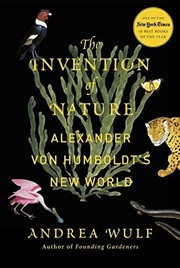
The Invention of Nature

Alexander von Humboldt's New World

Cover via Open Library

Rough AI truth score

83/100

Humboldt's integrative science and immense influence are real; describing him as the forgotten inventor of environmentalism makes a compelling biography but compresses collaborative traditions and later reinvention into one heroic lineage.

Based on three central claims · medium confidence

The three claims

01Supported

Alexander von Humboldt treated nature as an interconnected system in which organisms, climate, geology, and human action interact.

Humboldt deliberately combined measurement across disciplines and described reciprocal relations between organisms and environments. His work connected vegetation, altitude, temperature, geography, and land use in ways recognizable within later ecological and Earth-system thinking.

02Supported

Humboldt helped found modern plant geography by relating species distributions to climate, latitude, and elevation.

His comparative measurements and visualizations linked vegetation zones with physical gradients across regions, shaping biogeography's later questions and methods. He did not work in isolation, but his synthesis, global comparisons, and communication had durable disciplinary impact.

03Mixed

Humboldt was the singular forgotten source of Darwin's evolutionary thinking and modern environmentalism.

Darwin read and admired Humboldt, and scholars trace real influence on evolutionary, conservation, and nature-writing traditions. The singular-source formulation is biographical compression: Humboldt drew on networks of collaborators and predecessors, while later environmentalism had many independent roots.

Other claims worth checking
  • Humboldt warned that colonial agriculture and deforestation could alter climate.
  • His scientific diagrams changed how complex environmental relationships were communicated.

What this number means. It is an AI-generated first-pass judgment of three central factual or causal claims—not a rating, exhaustive fact-check, or human peer review. Claim credits are 100% for supported, 75% for mostly supported, 50% for mixed, and 25% for weak, then averaged and rounded. Lower confidence means the score should move more as better evidence arrives.

Method three-central-claims/0.1.0 · checked 2026-09-01 · 3/3 selected claims assessed · method and source audit