AI ClaimsRapid review

Walter Isaacson · 2014

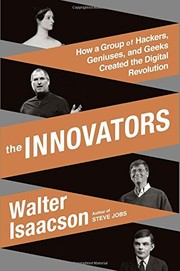
The Innovators

How a Group of Hackers, Geniuses, and Geeks Created the Digital Revolution

Cover via Open Library

Rough AI truth score

83/100

Its collaborative account of the digital revolution is broadly reliable. The strongest caveat is that a clean lineage from Lovelace to the web necessarily simplifies disputed priority and many parallel technical paths.

Based on three central claims · medium-high confidence

The three claims

01Supported

The digital revolution was built mainly by collaborating teams and institutions rather than by isolated lone geniuses.

The transistor, ARPANET, and modern computing each emerged from multi-person programs joining theory, engineering, funding, and implementation. Individual insight mattered, but the institutional record strongly supports the book's collaborative emphasis.

03Mostly supported

Government and university networks, especially ARPANET, supplied the central technical path to today's internet.

DARPA documents ARPANET's four-node start, later growth, and 1983 TCP/IP transition. The internet also depended on independent packet-switching research, international networks, standards communities, and commercial adoption, so no single program owns the whole origin story.

Other claims worth checking
  • The personal computer joined counterculture ideals to engineering advances.
  • Open standards were decisive to the web's rapid spread.

What this number means. It is an AI-generated first-pass judgment of three central factual or causal claims—not a rating, exhaustive fact-check, or human peer review. Claim credits are 100% for supported, 75% for mostly supported, 50% for mixed, and 25% for weak, then averaged and rounded. Lower confidence means the score should move more as better evidence arrives.

Method three-central-claims/0.1.0 · checked 2026-09-01 · 3/3 selected claims assessed · method and source audit