AI ClaimsRapid review

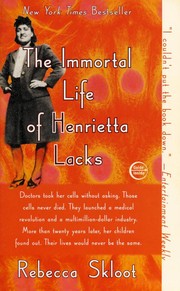
Rebecca Skloot · 2010

The Immortal Life of Henrietta Lacks

The woman behind the HeLa cell line

Cover via Open Library

Rough AI truth score

92/100

The book's central factual account is exceptionally well corroborated: the cells were taken without her knowledge, transformed research, and exposed lasting failures of consent, privacy, communication, and benefit sharing.

Based on three central claims · high confidence

The three claims

01Supported

Cells taken during Henrietta Lacks's 1951 cervical-cancer treatment became HeLa without her knowledge or consent.

NIH records identify the biopsy source, patient, hospital, year, diagnosis, and absence of knowledge or consent. Tissue collection followed practices then common and not clearly prohibited, but that historical legal context does not change the factual absence of permission.

03Mostly supported

The Lacks family's experience reveals serious failures of consent, privacy, communication, and respect in biospecimen research.

Later disclosure of identity and genome data affected relatives who had not chosen participation, and institutions now cite the case when strengthening autonomy and family involvement. Some modern consent expectations postdate 1951, so present standards should not be projected backward without context.

Other claims worth checking
  • The family's lack of access to health care sharpened the injustice of commercial use of HeLa.
  • HeLa contamination also created major problems for cell-culture science.

What this number means. It is an AI-generated first-pass judgment of three central factual or causal claims—not a rating, exhaustive fact-check, or human peer review. Claim credits are 100% for supported, 75% for mostly supported, 50% for mixed, and 25% for weak, then averaged and rounded. Lower confidence means the score should move more as better evidence arrives.

Method three-central-claims/0.1.0 · checked 2026-09-01 · 3/3 selected claims assessed · method and source audit