AI ClaimsRapid review

Jonathan Haidt · 2005

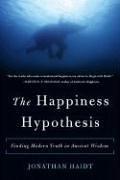
The Happiness Hypothesis

Finding Modern Truth in Ancient Wisdom

Cover via Open Library

Rough AI truth score

67/100

Haidt's synthesis broadly agrees with modern well-being research: close relationships, meaningful activity, prosocial engagement, and a sense of purpose matter, while adaptation and comparison limit some external gains. The book is less secure when diverse philosophical and religious traditions are treated as converging on one scientific formula; flourishing is plural, culturally shaped, and difficult to reduce to one outcome.

Based on three central claims · medium confidence

The three claims

01Mostly supported

Close relationships, meaningful activity, and prosocial engagement are robust correlates of well-being.

Cross-sectional, longitudinal, and intervention research consistently links supportive relationships, purpose, and prosocial behavior with life satisfaction and health. Causality is bidirectional, selection matters, relationship quality exceeds simple quantity, and effects vary across people and cultures.

02Mostly supported

Adaptation and social comparison limit durable happiness gains from many external changes.

Panel and experimental evidence shows adaptation to many income and life changes and effects of relative standing. Adaptation is incomplete for some chronic conditions, unemployment, disability, bereavement, and relationship changes, and material improvements can still produce durable gains, especially from low baselines.

03Mixed

Ancient wisdom traditions converge on a scientifically validated formula for human flourishing.

Many traditions emphasize relationships, virtue, attention, moderation, and purpose, themes with empirical support. Selection and interpretation of texts are necessarily subjective; traditions disagree about selfhood, desire, duty, transcendence, and political life, while science measures only some components of flourishing.

Other claims worth checking
  • Moral elevation can motivate prosocial behavior.
  • Coherent identity and participation in something larger than the self can supply meaning.

What this number means. It is an AI-generated first-pass judgment of three central factual or causal claims—not a rating, exhaustive fact-check, or human peer review. Claim credits are 100% for supported, 75% for mostly supported, 50% for mixed, and 25% for weak, then averaged and rounded. Lower confidence means the score should move more as better evidence arrives.

Method three-central-claims/0.1.0 · checked 2026-09-01 · 3/3 selected claims assessed · method and source audit