AI ClaimsRapid review

John Maynard Keynes · 1936

The General Theory of Employment, Interest and Money

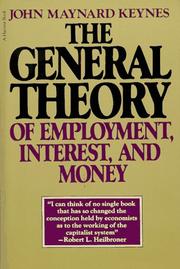
Cover via Open Library

Rough AI truth score

83/100

Keynes successfully displaced the idea that flexible markets must quickly restore full employment. Effective demand, expectations, liquidity, and multiplier effects remain central to macroeconomics, though their size and policy implications depend on slack, inflation, financial conditions, openness, and monetary response.

Based on three central claims · high confidence

The three claims

01Supported

An economy can settle below full employment because aggregate demand is insufficient, without wages and prices quickly restoring equilibrium.

Deep recessions repeatedly show persistent unemployment and unused capacity alongside weak spending, while contemporary macroeconomics models nominal rigidities and coordination failures directly. Supply disruptions and structural mismatch can also drive unemployment, so deficient demand is not a complete theory of every downturn.

02Mostly supported

Investment depends heavily on uncertain expectations and interest conditions, making output and employment intrinsically volatile.

Investment is empirically volatile and responds to financing conditions, expected demand, uncertainty, and confidence, consistent with Keynes's emphasis on expectations. Technology, taxes, credit supply, adjustment costs, and global demand also matter, so the book's psychological vocabulary is suggestive rather than a complete measurable model.

03Mostly supported

Fiscal expansion can raise output and employment through a multiplier when resources are underused.

A large empirical literature finds positive fiscal multipliers, often larger under high unemployment or constrained monetary policy. Estimates vary with timing, instrument, debt, openness, expectations, and central-bank behavior, so no single multiplier or automatic case for stimulus follows from the mechanism.

Other claims worth checking
  • Liquidity preference helps determine interest rates.
  • Saving intentions do not mechanically create equal investment.

What this number means. It is an AI-generated first-pass judgment of three central factual or causal claims—not a rating, exhaustive fact-check, or human peer review. Claim credits are 100% for supported, 75% for mostly supported, 50% for mixed, and 25% for weak, then averaged and rounded. Lower confidence means the score should move more as better evidence arrives.

Method three-central-claims/0.1.0 · checked 2026-09-01 · 3/3 selected claims assessed · method and source audit