AI ClaimsRapid review

Peter Brannen · 2017

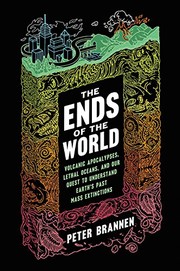
The Ends of the World

Volcanic Apocalypses, Lethal Oceans, and Our Quest to Understand Earth's Past Mass Extinctions

Cover via Open Library

Rough AI truth score

83/100

The Big Five, their diverse triggers, and their climate-ocean kill mechanisms are well grounded. Analogies to current change are scientifically useful but must respect differences in rate, baseline, geography, duration, and the fact that today's crisis has not yet reached past geological magnitudes.

Based on three central claims · high confidence

The three claims

01Supported

The fossil record identifies five especially severe Phanerozoic extinction intervals that reorganized ecosystems.

Marine and terrestrial records show exceptional, geologically rapid biodiversity losses at the end Ordovician, late Devonian, end Permian, end Triassic, and end Cretaceous. Magnitudes and event boundaries are revised as sampling improves.

03Mostly supported

Past greenhouse-driven extinctions are direct quantitative previews of the present human-caused biodiversity crisis.

Past events establish dangerous mechanisms and sensitivities, while modern warming, acidification, habitat loss, exploitation, and pollution create comparable stress types. Rates, initial conditions, continental arrangements, and total forcing differ, so analogy is not identity.

Other claims worth checking
  • The end-Cretaceous impact is unusually secure among impact-extinction links.
  • Extinction selectivity matters as much as headline species-loss percentages.

What this number means. It is an AI-generated first-pass judgment of three central factual or causal claims—not a rating, exhaustive fact-check, or human peer review. Claim credits are 100% for supported, 75% for mostly supported, 50% for mixed, and 25% for weak, then averaged and rounded. Lower confidence means the score should move more as better evidence arrives.

Method three-central-claims/0.1.0 · checked 2026-09-01 · 3/3 selected claims assessed · method and source audit