AI ClaimsRapid review

Joseph E. LeDoux · 1996

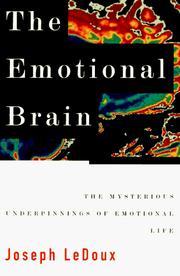
The Emotional Brain

The Mysterious Underpinnings of Emotional Life

Cover via Open Library

Rough AI truth score

75/100

The book correctly centered learned threat circuits and processing outside awareness. Later work—including LeDoux's own—draws a sharper line between defensive survival circuits and the conscious feeling of fear, limiting the older language of one emotional brain system.

Based on three central claims · medium-high confidence

The three claims

01Supported

The amygdala is important for learning and expressing associations between cues and biologically significant threats.

Lesion, conditioning, and systems-neuroscience evidence strongly supports amygdala involvement in assigning and using learned threat value. The amygdala is part of interacting circuits rather than a standalone fear center, but its causal role is substantial.

02Mostly supported

Threat-related processing and bodily responses can begin without conscious recognition of the triggering cue.

Conditioning, autonomic responses, and rapid valuation can occur without full conscious report. The evidence does not imply a single hardwired low road for every stimulus, and measurement of awareness and temporal pathway claims requires care.

03Mixed

Defensive circuits in the amygdala directly generate the conscious feeling of fear.

Amygdala-centered survival circuits detect and respond to threats, but defensive behavior, physiological arousal, and subjective fear are not interchangeable. Later theory separates survival functions from conscious feeling while retaining indirect causal contributions.

Other claims worth checking
  • Emotional learning can persist outside explicit memory.
  • Different emotion-related functions recruit overlapping rather than unitary circuits.

What this number means. It is an AI-generated first-pass judgment of three central factual or causal claims—not a rating, exhaustive fact-check, or human peer review. Claim credits are 100% for supported, 75% for mostly supported, 50% for mixed, and 25% for weak, then averaged and rounded. Lower confidence means the score should move more as better evidence arrives.

Method three-central-claims/0.1.0 · checked 2026-09-01 · 3/3 selected claims assessed · method and source audit