AI ClaimsRapid review

M. Mitchell Waldrop · 2001

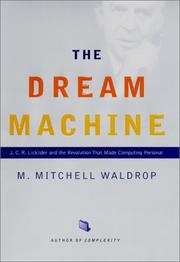
The Dream Machine

J.C.R. Licklider and the Revolution That Made Computing Personal

Cover via Open Library

Rough AI truth score

83/100

Waldrop persuasively connects Licklider's interactive-computing vision, ARPA patronage, time-sharing, networking, and personal-computing research. The vision mattered greatly, but the revolution was a distributed achievement with parallel technical and institutional roots.

Based on three central claims · high confidence

The three claims

01Supported

J.C.R. Licklider articulated an influential vision of interactive, networked computing rather than computers used mainly for batch calculation.

DARPA's historical record directly identifies Licklider's program leadership and 1963 vision of computers as a central medium of informational interaction. Subsequent ARPA work on time-sharing and networking visibly pursued that direction.

02Mostly supported

Flexible public research funding and a connected community of laboratories helped turn interactive-computing ideas into durable systems.

Institutional histories document sustained ARPA investment, contractor-university collaboration, and experimental networks. Private firms, international work, semiconductor progress, and later commercialization were also indispensable to widespread adoption.

03Mostly supported

The personal-computing and internet revolutions can be traced primarily to Licklider's individual vision.

Licklider was an unusually consequential connector, funder, and theorist, so using his career as a narrative spine is justified. Multiple independent packet-switching efforts, hardware advances, PARC, hobbyists, standards groups, and entrepreneurs prevent a single-origin account.

Other claims worth checking
  • Research managers can shape fields through communities as well as grants.
  • Human-computer symbiosis anticipated later interactive systems.

What this number means. It is an AI-generated first-pass judgment of three central factual or causal claims—not a rating, exhaustive fact-check, or human peer review. Claim credits are 100% for supported, 75% for mostly supported, 50% for mixed, and 25% for weak, then averaged and rounded. Lower confidence means the score should move more as better evidence arrives.

Method three-central-claims/0.1.0 · checked 2026-09-01 · 3/3 selected claims assessed · method and source audit