AI ClaimsRapid review

James D. Watson · 1968

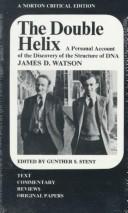
The Double Helix

A Personal Account of the Discovery of the Structure of DNA

Cover via Open Library

Rough AI truth score

75/100

The memoir captures the competitive model-building race and the decisive structure, but its self-serving perspective distorts Rosalind Franklin's science and minimizes how much Watson and Crick relied on her and others' experimental data.

Based on three central claims · high confidence

The three claims

01Supported

Watson and Crick combined model building, chemical constraints, and X-ray evidence to propose DNA's antiparallel double-helical structure in 1953.

The contemporary Nature papers and later structural work confirm the paired helical model and complementary base-pairing insight. Their synthesis was brilliant, while depending on a distributed research program rather than two isolated minds.

02Mostly supported

Seeing Rosalind Franklin and Raymond Gosling's Photograph 51 gave Watson crucial confirmation that B-form DNA was helical.

The image clearly records a helical diffraction pattern and Watson described its impact. Historians now emphasize that Franklin's quantitative MRC report and broader analysis, not Photo 51 alone, supplied more consequential constraints on the model.

03Mixed

Franklin was an obstructive experimentalist who failed to recognize the meaning of her own data until Watson and Crick solved the problem.

Franklin was cautious about the A and B forms and did not produce the final base-paired model, but her rigorous measurements supplied key dimensions and symmetry constraints. Watson's gendered characterization is widely judged reality-distorting and historically incomplete.

Other claims worth checking
  • Scientific competition accelerated the discovery while corroding trust and credit.
  • Informal sharing of unpublished results shaped the final breakthrough.

What this number means. It is an AI-generated first-pass judgment of three central factual or causal claims—not a rating, exhaustive fact-check, or human peer review. Claim credits are 100% for supported, 75% for mostly supported, 50% for mixed, and 25% for weak, then averaged and rounded. Lower confidence means the score should move more as better evidence arrives.

Method three-central-claims/0.1.0 · checked 2026-09-01 · 3/3 selected claims assessed · method and source audit