AI ClaimsRapid review

Carl Sagan · 1995

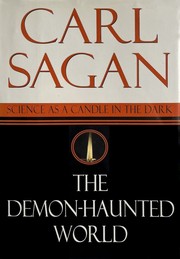
The Demon-Haunted World

Science as a Candle in the Dark

Cover via Open Library

Rough AI truth score

75/100

Sagan's practical norms—seek testable evidence, compare alternatives, quantify where possible, and distrust arguments from authority—remain excellent. Scientific literacy and critical-thinking tools help, but false beliefs are also driven by identity, trust, repetition, media systems, and social incentives, so a generic baloney-detection kit is not sufficient.

Based on three central claims · medium-high confidence

The three claims

01Supported

Reliable inquiry requires testable evidence, alternative explanations, independent checking, quantification where possible, and willingness to revise beliefs.

These are core norms of modern empirical inquiry and organized error correction. No checklist eliminates judgment or institutional failure, but converging methods, transparency, replication, and adversarial testing reduce dependence on authority and private intuition.

02Mostly supported

Pseudoscientific and conspiratorial beliefs flourish when scientific literacy, trustworthy institutions, and habits of skeptical inquiry are weak.

Knowledge, analytic reflection, and institutional trust correlate with resistance to some false claims, but relationships are domain-specific and politically mediated. Highly informed people can use reasoning defensively, while distrust may reflect real failures rather than simple ignorance.

03Mixed

Teaching a general toolkit of logical fallacies and skeptical questions will reliably inoculate people against misinformation across domains.

Prebunking, lateral reading, and targeted media-literacy interventions can improve discernment, but transfer is incomplete and effects can decay. Identity, familiarity, source cues, emotion, platform design, and repeated exposure often overwhelm decontextualized critical-thinking lessons.

Other claims worth checking
  • Wonder and skepticism reinforce rather than oppose each other.
  • Extraordinary claims need evidence proportionate to the alternatives they displace.

What this number means. It is an AI-generated first-pass judgment of three central factual or causal claims—not a rating, exhaustive fact-check, or human peer review. Claim credits are 100% for supported, 75% for mostly supported, 50% for mixed, and 25% for weak, then averaged and rounded. Lower confidence means the score should move more as better evidence arrives.

Method three-central-claims/0.1.0 · checked 2026-09-01 · 3/3 selected claims assessed · method and source audit