AI ClaimsRapid review

Clifford Stoll · 1989

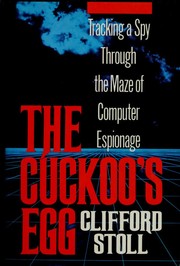
The Cuckoo's Egg

Tracking a Spy Through the Maze of Computer Espionage

Cover via Open Library

Rough AI truth score

83/100

Stoll's first-person account is strongly anchored by his contemporary technical paper and the documented intrusion investigation. It remains a vivid security history, though its single-case vantage point cannot establish a general theory of attackers or effective defense.

Based on three central claims · high confidence

The three claims

01Supported

A tiny accounting discrepancy led Stoll to uncover a persistent intrusion moving through interconnected research computers.

Stoll documented the investigation contemporaneously in Communications of the ACM, including the accounting anomaly and prolonged tracing work. The independent archival record strongly supports the book's core sequence rather than relying only on later memoir.

02Mostly supported

Weak passwords, trusted connections, and poor monitoring made late-1980s academic networks unusually vulnerable to lateral intrusion.

The documented case demonstrates exploitation of weak authentication and network trust, while contemporary network histories explain the collaborative environment in which security was secondary. One incident cannot measure prevalence across every connected system.

03Mostly supported

Patient human investigation and detailed logs were more decisive than automated tools in resolving this early espionage case.

Stoll's record plainly shows painstaking correlation, improvised monitoring, and coordination among institutions. The conclusion fits this case, but it should not be generalized into a claim that automation is secondary in modern incident response.

Other claims worth checking
  • Open research networks created security tradeoffs.
  • Small anomalies can expose much larger system failures.

What this number means. It is an AI-generated first-pass judgment of three central factual or causal claims—not a rating, exhaustive fact-check, or human peer review. Claim credits are 100% for supported, 75% for mostly supported, 50% for mixed, and 25% for weak, then averaged and rounded. Lower confidence means the score should move more as better evidence arrives.

Method three-central-claims/0.1.0 · checked 2026-09-01 · 3/3 selected claims assessed · method and source audit