AI ClaimsRapid review

Laurie Garrett · 1994

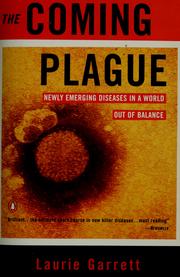
The Coming Plague

Newly Emerging Diseases in a World Out of Balance

Cover via Open Library

Rough AI truth score

92/100

The book's central warning—that ecological disruption, global mobility, inequality, and microbial evolution would keep producing infectious threats—has aged remarkably well. Some case narratives are journalistic rather than archival history.

Based on three central claims · high confidence

The three claims

01Supported

Infectious disease had not been conquered; new pathogens and familiar infections would continue to emerge and re-emerge.

HIV/AIDS, Ebola, Legionnaires' disease, drug-resistant tuberculosis, and later outbreaks decisively refuted any simple postinfectious era. Contemporary Institute of Medicine work independently identified emerging infections as a durable threat.

02Supported

Urbanization, ecological disruption, travel, poverty, weak health systems, and conflict create opportunities for disease emergence and spread.

Later global analyses confirm that emergence clusters where land use, wildlife contact, population change, mobility, and surveillance interact. These are risk factors rather than a deterministic formula, and their importance differs by pathogen.

03Mostly supported

Antimicrobial resistance would erode major twentieth-century medical gains unless drug use and surveillance changed.

Resistance has expanded across bacterial, parasitic, and fungal pathogens and is recognized as a major global health threat. The trajectory is serious but heterogeneous, and new drugs, diagnostics, vaccination, and stewardship have prevented a uniform return to the pre-antibiotic era.

Other claims worth checking
  • Public-health capacity is a shared security infrastructure, not only a domestic service.
  • Fear and stigma can undermine outbreak response as surely as technical shortages.

What this number means. It is an AI-generated first-pass judgment of three central factual or causal claims—not a rating, exhaustive fact-check, or human peer review. Claim credits are 100% for supported, 75% for mostly supported, 50% for mixed, and 25% for weak, then averaged and rounded. Lower confidence means the score should move more as better evidence arrives.

Method three-central-claims/0.1.0 · checked 2026-09-01 · 3/3 selected claims assessed · method and source audit