AI ClaimsRapid review

Greg Lukianoff and Jonathan Haidt · 2018

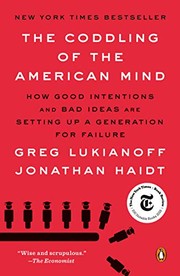
The Coddling of the American Mind

How Good Intentions and Bad Ideas Are Setting Up a Generation for Failure

Cover via Open Library

Rough AI truth score

58/100

The book correctly identifies rising adolescent distress and makes a plausible case for exposure, autonomy, and viewpoint diversity. Its unified safetyism-and-social-media causal narrative is much less secure: trends are real, but mechanisms, subgroup effects, institutional prevalence, and counterfactuals remain disputed.

Based on three central claims · medium-low confidence

The three claims

01Mostly supported

Anxiety, depression, self-harm, and demand for mental-health services rose substantially among young Americans during the 2010s.

Multiple surveys and administrative series show increases, particularly for adolescent girls and some college populations. Measurement changes, help-seeking, diagnostic practice, subgroup variation, and pandemic effects complicate exact levels but do not erase the broad trend.

02Mixed

Overprotection, reduced unsupervised play, and institutional safetyism cause fragility by preventing normal exposure and resilience building.

Exposure therapy and developmental autonomy support the idea that calibrated challenge can build competence, while avoidance can maintain anxiety. National historical exposure is hard to measure, risks differ, and campus anecdotes do not establish that safety practices caused population-level mental-health trends.

03Mixed

Social media is a major cause of the post-2010 youth mental-health deterioration, especially among girls.

Timing, dose patterns, natural experiments, and associations support risk for some users and behaviors, particularly problematic use. Reviews find small, heterogeneous effects, bidirectional causality, weak measurement, and limited causal evidence, so social media is likely one contributor rather than a sole explanation.

Other claims worth checking
  • Cognitive distortions can be socially reinforced.
  • Viewpoint diversity can improve academic inquiry.

What this number means. It is an AI-generated first-pass judgment of three central factual or causal claims—not a rating, exhaustive fact-check, or human peer review. Claim credits are 100% for supported, 75% for mostly supported, 50% for mixed, and 25% for weak, then averaged and rounded. Lower confidence means the score should move more as better evidence arrives.

Method three-central-claims/0.1.0 · checked 2026-09-01 · 3/3 selected claims assessed · method and source audit