AI ClaimsRapid review

Eric S. Raymond · 1999

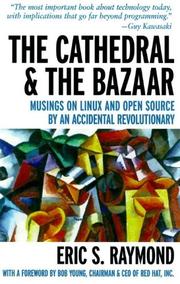
The Cathedral and the Bazaar

Musings on Linux and Open Source by an Accidental Revolutionary

Cover via Open Library

Rough AI truth score

75/100

Raymond's essay captured genuine advantages of open collaboration, frequent releases, and broad peer review. Its two-model contrast and famous bug aphorism are productive heuristics, not universal laws; governance, modularity, incentives, and reviewer attention determine whether openness works.

Based on three central claims · medium confidence

The three claims

01Mostly supported

Releasing software early and often can improve feedback and align development with real user needs.

Iterative public development can shorten feedback loops and expose assumptions quickly, and the practice became influential in open-source projects. It also creates coordination, stability, and security costs when releases lack testing or users cannot evaluate them.

02Mostly supported

Given enough eyeballs, all software bugs become shallow.

Many independent reviewers can increase the chance that defects are noticed and understood, especially in widely used, modular code. Visibility alone does not supply expertise, incentives, coordination, or responsible remediation, and obscure components may attract few meaningful reviewers.

03Mostly supported

Open-source development is best understood as a bazaar, while proprietary development is generally cathedral-like and centrally planned.

The contrast clearly identifies differences in participation and release practice and remains useful vocabulary. Real projects combine hierarchy and openness: open-source maintainers exercise authority, while proprietary teams can be iterative, distributed, and receptive to outside feedback.

Other claims worth checking
  • Treating users as co-developers can be productive.
  • Leadership still matters in decentralized projects.

What this number means. It is an AI-generated first-pass judgment of three central factual or causal claims—not a rating, exhaustive fact-check, or human peer review. Claim credits are 100% for supported, 75% for mostly supported, 50% for mixed, and 25% for weak, then averaged and rounded. Lower confidence means the score should move more as better evidence arrives.

Method three-central-claims/0.1.0 · checked 2026-09-01 · 3/3 selected claims assessed · method and source audit