AI ClaimsRapid review

Marc Levinson · 2006

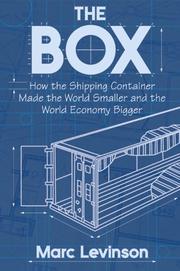
The Box

How the Shipping Container Made the World Smaller and the World Economy Bigger

Cover via Open Library

Rough AI truth score

92/100

The container's operational history and its role in lowering transport costs are strongly supported. Containerization transformed trade, but the book's largest globalization claims must share causality with policy liberalization, communications, and industrial change.

Based on three central claims · high confidence

The three claims

01Supported

Malcom McLean's integrated truck-to-ship system and the 1956 Ideal-X voyage launched modern container shipping in the United States.

The Smithsonian documents McLean's acquisition of a steamship company, the Ideal-X voyage with 58 containers, and the integrated transfer system. Earlier containers existed, but his system was a decisive commercial turning point.

02Supported

Standard containers sharply reduced cargo-handling time, damage, theft, and the cost of moving goods across transport modes.

Museum and trade histories describe the expensive waterfront bottleneck and the gains from mechanized, sealed intermodal movement. Standardization allowed ships, cranes, railcars, trucks, and ports to operate as one logistics system.

03Mostly supported

Containerization was a principal cause of the late-twentieth-century expansion of global trade and fragmented supply chains.

The WTO identifies containerization as a major transport-cost innovation that expanded traded volume and enabled production unbundling. Tariff cuts, investment policy, communications, exchange rates, and manufacturing strategy were also indispensable causes.

Other claims worth checking
  • Containerization shifted economic power among ports and unions.
  • The Vietnam War accelerated adoption of container logistics.

What this number means. It is an AI-generated first-pass judgment of three central factual or causal claims—not a rating, exhaustive fact-check, or human peer review. Claim credits are 100% for supported, 75% for mostly supported, 50% for mixed, and 25% for weak, then averaged and rounded. Lower confidence means the score should move more as better evidence arrives.

Method three-central-claims/0.1.0 · checked 2026-09-01 · 3/3 selected claims assessed · method and source audit