AI ClaimsRapid review

Steven Pinker · 2002

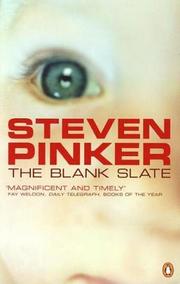
The Blank Slate

The Modern Denial of Human Nature

Cover via Open Library

Rough AI truth score

75/100

Pinker is right that minds are not content-free and that genetic, developmental, and evolved constraints matter. His anti-blank-slate target sometimes compresses more nuanced social-science positions, while genetic influence never implies immutability or makes culture and institutions secondary.

Based on three central claims · medium-high confidence

The three claims

01Supported

The human mind is not a blank slate; inherited developmental architecture contributes to personality, cognition, and behavior.

Behavioral genetics, developmental psychology, neuroscience, and cross-cultural research all reject a content-free mind formed entirely by experience. Heritability is population-specific and compatible with strong environmental effects, plasticity, and social change.

02Mostly supported

Evolution produced species-typical psychological dispositions that cultures elaborate rather than create from nothing.

Universal developmental regularities and evolved motivational and learning systems support species-typical constraints. Identifying specific adaptations is difficult, cultural evolution can reshape cognition, and broad evolutionary stories require direct comparative and developmental tests.

03Mixed

Twentieth-century intellectual life broadly denied human nature because scholars feared its moral and political implications.

Some influential behaviorist and social-constructionist traditions minimized innate structure, and moral fears did shape debate. Many anthropologists, psychologists, biologists, and social theorists held interactionist views, so a unified modern denial is partly a rhetorical construction.

Other claims worth checking
  • Biological explanation does not morally justify inequality.
  • Parenting effects on long-run personality are often overestimated.

What this number means. It is an AI-generated first-pass judgment of three central factual or causal claims—not a rating, exhaustive fact-check, or human peer review. Claim credits are 100% for supported, 75% for mostly supported, 50% for mixed, and 25% for weak, then averaged and rounded. Lower confidence means the score should move more as better evidence arrives.

Method three-central-claims/0.1.0 · checked 2026-09-01 · 3/3 selected claims assessed · method and source audit