AI ClaimsRapid review

Nassim Nicholas Taleb · 2007

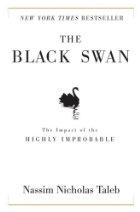
The Black Swan

The Impact of the Highly Improbable

Cover via Open Library

Rough AI truth score

67/100

Taleb is persuasive that rare, high-impact events and model uncertainty are routinely understated, especially in social and financial systems. Fat tails make averages and Gaussian intuition dangerous. The stronger rhetoric—that consequential events are inherently beyond useful probabilistic forecasting—goes too far: tail-aware models, stress tests, scenarios, and robust decisions can still improve judgment without claiming precision.

Based on three central claims · medium confidence

The three claims

01Mostly supported

A small number of extreme events can dominate outcomes in finance, conflict, technology, and other complex systems.

Many empirical distributions in finance, disasters, city size, conflict, and attention are heavy-tailed, so extremes contribute far more than normal models imply. Tail form and stability vary by domain, and not every process is power-law or dominated by a few observations.

02Mostly supported

People systematically create retrospective stories that make surprising events appear more predictable than they were.

Hindsight-bias research finds that learning an outcome shifts remembered probabilities and perceived inevitability. The effect is robust but heterogeneous and can be reduced by considering alternatives, preserving forecasts, and distinguishing foreseeable risk from a specifically predictable event.

03Mixed

High-impact rare events are generally beyond useful probabilistic forecasting, so resilience should replace prediction.

Precise point forecasts for unprecedented extremes are fragile, and robust design is often wise. Yet probabilistic ranges, extreme-value methods, early-warning indicators, stress tests, and scenario analysis can be decision-useful; prediction and resilience are complements rather than substitutes.

Other claims worth checking
  • Experts often underestimate model error and unknown unknowns.
  • Systems should limit ruin rather than optimize only expected returns.

What this number means. It is an AI-generated first-pass judgment of three central factual or causal claims—not a rating, exhaustive fact-check, or human peer review. Claim credits are 100% for supported, 75% for mostly supported, 50% for mixed, and 25% for weak, then averaged and rounded. Lower confidence means the score should move more as better evidence arrives.

Method three-central-claims/0.1.0 · checked 2026-09-01 · 3/3 selected claims assessed · method and source audit