AI ClaimsRapid review

Jonathan Weiner · 1994

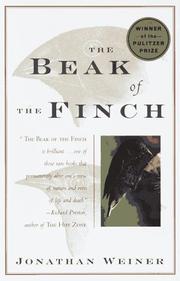
The Beak of the Finch

A Story of Evolution in Our Time

Cover via Open Library

Rough AI truth score

92/100

Weiner's account of the Grants' finch research remains an unusually strong popular record of natural selection measured in the wild. Later work confirmed reversals, competition, introgression, and incipient speciation while making the story more dynamic than a simple march toward adaptation.

Based on three central claims · high confidence

The three claims

02Supported

Changing climate, food availability, and competition repeatedly alter the direction and strength of selection on Darwin's finches.

Decades of data show selection reversing across wet and dry periods and shifting when competitors arrive. The results demonstrate that rapid evolution need not be unidirectional and that ecological context changes which phenotypes prosper.

03Mostly supported

The finch observations provide a simple completed sequence from ecological selection to permanently isolated new species.

The work documents divergence, assortative mating, hybridization, introgression, and an incipient reproductively isolated lineage. Species boundaries remain porous and contingent, so the strongest completed-speciation framing is more definite than the data require.

Other claims worth checking
  • Evolutionary change can reverse when environmental conditions change.
  • Long-term individual-level observation reveals processes hidden by short studies.

What this number means. It is an AI-generated first-pass judgment of three central factual or causal claims—not a rating, exhaustive fact-check, or human peer review. Claim credits are 100% for supported, 75% for mostly supported, 50% for mixed, and 25% for weak, then averaged and rounded. Lower confidence means the score should move more as better evidence arrives.

Method three-central-claims/0.1.0 · checked 2026-09-01 · 3/3 selected claims assessed · method and source audit